

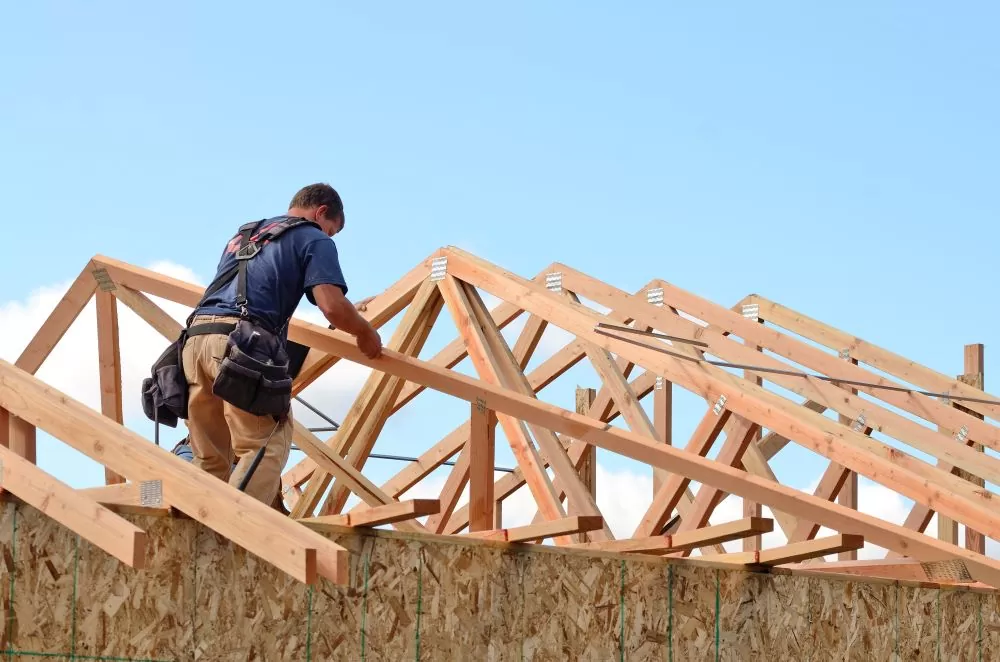
Wood roof trusses have become popular in most constructions due to the following reasons of strength, versatility, and cost. By learning the various kinds of wood roof trusses, the advantages associated with their use, and various installation tips, homeowners and builders are in a better position to make positive decisions.
Types of Wood Roof Trusses
Many designs of wood roof trusses are available in the market, and the choice of the design depends on the specific application, including the style of construction. Here are some of the most common types:
- King Post Truss
- Description: The basic type of which comprises two top chords, one bottom chord and a vertical post known as the king post.
- Use: Most suitable for use in short bridges or in small structures such as homes or buildings with limited stories.
- Queen Post Truss
- Description: A type of king post truss with two vertical posts, known as the queen posts, and an additional horizontal beam.
- Use: Appropriate where spans are moderate, and it offers more support and stability as compared to the king post trusses.
- Fink Truss
- Description: This design has a W-shape web at the middle in a triangular frame.
- Use: It is usually applied in the residential roofing systems since it can spread loads over a large area.
- Howe Truss
- Description: Diagonal web members which slope towards the middle of the structure as well as the vertical web members are present.
- Use: Common in bridges but can also be employed in establishments whose roofs feature large spans for additional support.
- Scissor Truss
- Description: It has the two bottom chords which interlock each other to give an impression of a vaulted ceiling.
- Use: Used on open structures, cathedral ceilings or joists that can give out both beauty and support.
- Attic Truss
- Description: Intended for the provision of further living space or other utility such as a storeroom in the roof.
- Use: Perfect for people who want to construct a house with an attic or additional space while only a little expanding the plot area.
Benefits of Wood Roof Trusses
Wood roof trusses offer numerous advantages that make them a popular choice in both residential and commercial construction:
- Cost-Effective
- Prefabricated trusses are cheaper than constructing a roof on-site because there are minimal costs on both labor and material.
- Strength and Durability
- One of the important characteristics of a wood truss is that it sustains loads in a most efficient manner throughout the structure and it can easily support heavy roof loads.
- Versatility
- The wood trusses come in different types of designs and sizes suitable to complement the architectural enshrinement of a building as well as performing its intended function.
- Speed of Installation
- Trusses are transported to the construction site, for assembly which helps in saving time compared to stick built construction methods.
- Design Flexibility
- Tailored trusses can be created to fulfill engineering requirements providing versatility in designing roofs.
- Eco-Friendly
- Wood is a renewable material and contemporary trusses are frequently crafted from harvested timber making them an eco friendly choice.
Installation Tips for Wood Roof Trusses
Installation procedures concerning wood roof trusses are vital in as much as truss strength and durability are concerned. Here are some essential tips:
- Pre-Installation Preparation
- Make sure that the construction site is flat and is free of any form of hindrance be it organic or demarcated.
- Ensure that all trusses and the used materials have arrived, and those in a damaged state have been identified.
- Handling and Storage
- Essentials of storing trusses are to keep them well off the ground and cover them well to prevent the elements and moisture from damaging them.
- While handling the trusses proper lifting techniques should be adopted to prevent damage on them.
- Setting Trusses
- Due to the apparent weight of the trusses, it would be necessary to use a crane or any lifting equipment to ensure proper alignment of the trusses.
- Beginning with the first truss it is mounted on one side of the building and temporarily supported by temporary supports.
- Securing Trusses
- Use metal truss clips or hurricane ties to attach the trusses to the top plates of the walls.
- Ensure all connections are tight and secure, following the manufacturer’s guidelines and local building codes.
- Bracing
- Install temporary and permanent bracing to keep trusses aligned and stable during and after installation.
- Follow engineering specifications for bracing to ensure the roof system can withstand loads and stresses.
- Sheathing
- Apply roof sheathing (plywood or OSB) over the trusses, securing it with nails or screws as per building codes.
- Ensure the sheathing is properly aligned and gaps are minimized to provide a solid base for roofing materials.
- Inspection and Final Adjustments
- Conduct a thorough inspection to ensure all trusses are properly installed and braced.
- Make any necessary adjustments before proceeding with roofing material installation.
Conclusion
Among different types of constructed structures, wood roof trusses represent one of the most valuable and effective types of construction designing that can render a large number of advantages, including cost effectiveness, solidity, and versatile opportunities for designing.
With help of the information about classification of trusses and some crucial recommendations for their installation, the owners of houses and constructions, as well as the builders, can achieve favorable results in terms of durability and the aesthetic look of roof constructions.
In any roofing project for any home whether a residential home or a commercial building then the wood trusses are actually very reliable.












Leave a Reply