
Business
Here’s Why Supply Chain Convergence is the Future of E-commerce


The Evolution of E-commerce and the Role of Supply Chains
The landscape of commerce has undergone a significant transformation with the rise of e-commerce. Traditional retail models have given way to digital storefronts, and consumer behaviour has adapted to the convenience of online shopping. In this evolving ecosystem, supply chains play a crucial role, serving as the backbone that supports the seamless flow of goods from suppliers to consumers.
The Driving Forces Behind Supply Chain Convergence
Supply Chain Convergence represents a paradigm shift in how businesses approach supply chain management. Unlike the fragmented and disjointed systems of the past, Supply Chain Convergence advocates for the integration and harmonisation of various supply chain functions into a cohesive ecosystem. This shift is driven by several key factors reshaping the e-commerce landscape.
One of the primary drivers of Supply Chain Convergence is the ever-increasing expectations of consumers. Today’s shoppers demand not only a wide selection of products but also fast delivery, seamless experiences, and transparent communication throughout the purchasing process. To meet these expectations, businesses must adopt more agile and responsive supply chain models.
Additionally, technological advancements have played a significant role in driving Supply Chain Convergence. Innovations such as artificial intelligence, machine learning, and data analytics have revolutionised the way businesses manage and optimise their supply chains. These technologies provide real-time insights, predictive capabilities, and automation opportunities that enable companies to streamline operations and respond quickly to changing market dynamics.
Moreover, the competitive landscape of e-commerce compels businesses to seek differentiation and efficiency in their operations. Supply Chain Convergence offers a strategic advantage by allowing companies to optimise processes, reduce costs, and enhance customer satisfaction.
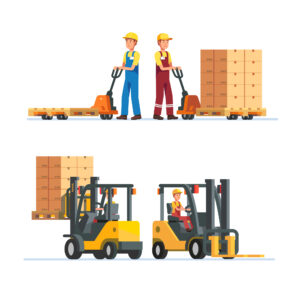
Warehouse workers working with forklifts and hand lifts. Loading and unloading goods cardboard boxes on pallets. Modern flat style vector illustration isolated on white background.
The Benefits of Supply Chain Convergence for E-commerce Businesses
The shift towards Supply Chain Convergence brings forth a myriad of benefits for e-commerce businesses. By integrating and aligning supply chain functions, companies can achieve greater efficiency, agility, and resilience in their operations.
- Improved Inventory Management: One significant benefit of Supply Chain Convergence is improved inventory management. By integrating inventory data across various channels and locations, businesses gain better visibility into their stock levels, reducing the risk of stockouts and overstocking. This enhanced visibility also enables firms to optimise inventory turnover, minimise carrying costs, and ensure product availability to meet customer demand.
- Quick Order Processing: Furthermore, Supply Chain Convergence facilitates faster order processing and fulfilment. By streamlining workflows and integrating order management systems, businesses can reduce lead times and improve order accuracy. This not only enhances the overall customer experience but also increases operational efficiency and reduces costs associated with order fulfilment.
- Enhance Flexibility and Scalability: Another critical advantage of Supply Chain Convergence is increased flexibility and scalability. Integrated supply chain systems allow businesses to adapt quickly to changing market conditions, seasonal fluctuations, and unexpected disruptions. Whether scaling up to meet peak demand or adjusting operations in response to supply chain disruptions, businesses can effectively manage volatility and uncertainty in the e-commerce landscape.

How Prolog fulfilment Enhances E-commerce Operations through Supply Chain Convergence
Prolog fulfilment a leader in supply chain optimisation, is at the forefront of driving Supply Chain Convergence in the e-commerce industry. Through its comprehensive suite of services and innovative technology solutions, Prolog fulfilment empowers businesses to streamline their supply chain operations and unlock new levels of efficiency and agility.
Advanced Inventory Management Capabilities: One way Prolog fulfilment enhances e-commerce operations is through its advanced inventory management capabilities. By leveraging sophisticated inventory tracking systems and real-time data analytics, Prolog fulfilment enables businesses to optimise stock levels, reduce carrying costs, and ensure timely replenishment of inventory.
Integrated Order Management Solutions: Additionally, Prolog fulfilment offers integrated order management solutions that streamline order processing and fulfilment. Through seamless integration with e-commerce platforms and shipping carriers, businesses can automate order routing, track shipments in real-time, and provide customers with accurate delivery estimates.
Supportive Design: Moreover, Prolog fulfilment’s warehousing and distribution services are designed to support the dynamic needs of e-commerce businesses. With strategically located warehouses, state-of-the-art facilities, and robust security measures, Prolog fulfilment ensures the safe and efficient storage and handling of inventory.

Remember that spark of excitement when a new idea finally comes to life? That moment when all the planning, creativity and anticipation collide into a single reveal? That’s precisely what a great product launch should feel like for your team and your audience. As a London event company, we know that launching a new product is more than a presentation; it’s an opportunity to create an unforgettable first impression and build a story people connect with instantly.
Product launches are about energy, clarity and experience. They’re about turning your brand into a moment. And in a fast-moving market, those moments matter more than ever. Here’s how your event partner can bring that vision to life.
1. Turning innovation into an experience
Every product launch starts with a vision, but it’s the experience that brings it to life. As a London event company, we see product launches as more than just presentations. To us, they’re theatre. They’re emotion. They’re a chance to pull your audience into your narrative and let them feel what your new product represents.
Whether it’s the buzz of a technological debut, the elegance of a luxury unveiling, or the energy of a fast-moving consumer launch, our mission is always the same:
- Transform your ideas into immersive moments that people remember.
- From the lighting that sets the tone to the pacing of the reveal to the way you guide guests from curiosity to excitement, every second tells a story.
2. Crafting a narrative that your guests can step into
Great product launches don’t just communicate features; they communicate identity.
They answer the deeper question:
“Why should this matter to me?”
We start by understanding the heart of the product, the problem it solves, the feeling it creates, and the values it represents. Then we build an experience that reflects that essence.
This might look like:
- A sensory walkthrough that builds anticipation room by room
- A cinematic countdown moment that sets the stage for the reveal
- A themed environment that visually embodies the product’s purpose
- Live demonstrations that make your audience part of the action
Our role is to turn a product into a journey, one that leaves your audience inspired and excited to share what they’ve experienced.
3. Where logistics and creativity meet
What lies behind all the smooth product launches is a production machine quietly working but tirelessly. Event strategy. Audience flow. Technical delivery. Creative direction. Supplier coordination.
There are so many things that go on behind the scenes to create the illusion of a few effortless, brilliant moments.
We are a London event company, which means that we unite the appropriate talents: production crews, designers, AV technicians, storytellers, stylists, and digital experts and combine their efforts in one functioning unit.
Because a high-impact launch requires:
- Flawless timing
- Perfect sound and lights.
- A setting that favours the narrative.
- Compelling content
- And an audience environment designed to spark emotion
The magic happens when all of these elements work in harmony.
4. Selecting the appropriate location at the moment
London is a fantastic screen of ready-to-launch spaces -industrial warehouses, elegant galleries, hidden basements, rooftop terraces, old halls and own-day studios.
However, a venue is not four walls.
It’s a character in your story.
It must complement your product and enhance the experience.
We consider:
- Impactful sound acoustics.
- The top light reveals a dramatic effect.
- Spatial flow space to display various product touchpoints.
- Press accessibility, influencers and VIPs.
- And the ability to make the space anything out of the ordinary.
With the right environment, your product becomes the star it deserves to be.
5. Combining physical and digital experiences
Hybrid thinking is used to develop the most successful launches today. Although the audience may be in the same room, the virtual presence extends far beyond that.
Our livestreaming, social-first solutions, and interactive displays and real-time engagement applications help expand our reach and make your product visible to thousands of people, not just those who were present at the event.
This is the place where a London event company actually brings up impact:
- We sort out your launch in both ways, the in-person experience and the way it looks and feels online.
So whatever you say in the room is echoed everywhere.
6. Creating a reveal moment that lands
Every product needs its moment that single second where anticipation peaks and the audience leans in.
We craft that moment with intention.
- Maybe it’s a dramatic blackout followed by a spotlight reveal.
- Maybe it’s a slow-unveiling stage choreographed with sound cues.
- Maybe it’s a surprise drop from above, a rising plinth, or an interactive hologram.
Whatever the approach, the goal is simple:
“Let the product speak. And make sure everyone is listening.”
7. Bringing ideas to life with a collaborative approach
We don’t believe in cookie-cutter launches.
Every brand is different. Every audience is different. Every product tells a unique story. That’s why our approach is always collaborative and bespoke.
From concept design to production management, you can explore how we bring product launches to life on our event services page. Your launch shouldn’t just communicate your product; it should elevate it.
Ready to launch something extraordinary?
If you’re preparing for a debut and want to create a moment your audience will honestly remember, we’d love to help you bring your vision to life. Let’s make something bold, meaningful and impossible to overlook.

Good business relationships are built on trust, consistency, and a little bit of human warmth. Clients stick around when they feel appreciated, not just invoiced. Employees put in extra effort when they know someone notices their work. Business partners invest more when the relationship feels mutual and respectful. None of this happens automatically.
Keeping clients happy, employees motivated, and business partners engaged takes more than solid work and fair pricing. It takes showing people they matter beyond what they contribute to the bottom line. Corporate gift baskets do this without the awkwardness that can come with business gifts. Pick the right one, and people remember it long after they’ve enjoyed the last chocolate or cracker.
Why Should You Care About Business Gifts?
Business gift baskets work because they land in that sweet spot between too formal and too casual. They’re appropriate for professional settings but don’t feel cold or obligatory. They suit different people without needing to know their life story. They show thought without making anyone feel like they owe something back. And they give people actual enjoyment, which creates good feelings attached to the business relationship.
The effects pop up in random ways. A client brings up a conversation about those amazing pretzels during a call three months later. An employee mentions the craft beer they shared with their spouse. A business partner still uses that bamboo cutting board and thinks about the company that sent it. These aren’t dramatic moments, but they keep positive feelings alive in ways that regular business dealings just can’t.
What Goes Into a Good Basket for Professional Relations
Grabbing a bunch of random snacks and cramming them into a basket doesn’t cut it. The difference between a simple and an extraordinary gift comes down to how everything fits together. Look at something like the Raspberry Truffle & Brie Luxury Box. It’s got Italian red wine, cheddar brie spread, water crackers, pesto, raspberry chocolate truffles, and dipping pretzels on a wooden tray. Everything works together, whether someone wants to set up a whole spread or just grab a snack here and there.
The trick is mixing stuff people recognize with things that surprise them. Everyone knows that good wine and quality chocolate taste great. That creates instant appreciation. But then there are items like raspberry truffles or specialty pesto that add something unexpected and memorable. This combo means people like the gift right away and also have something interesting to talk about later.
How it looks counts, especially in business. An engraved bamboo tray or solid wooden serving board shows that real effort went into choosing the gift. These aren’t throwaway containers that hit the trash once the food’s gone. They’re useful pieces that get pulled out regularly. Every time someone uses that tray for guests, there’s a little reminder of where it came from. That extended visibility makes the gift keep working long after the first impression.
Different Situations Need Different Approaches
A gift for a major client shouldn’t look exactly like what goes to a new hire. Senior executives expect different things from department teams. Corporate gift baskets adjust to these different needs better than most options because they’re naturally versatile.
Big-ticket relationships need gifts that show their importance without getting weird. The Luxe Golden Chocolate Collection hits that mark. Wine, Lindt chocolates, icewine chocolates, Belgian truffles, pesto, crackers, and pretzels on an engraved tray say that the relationship matters while staying professional. It’s substantial without crossing any lines.
Team gifts work differently. The Premium Beer & Gourmet Collection makes sense for groups because it’s built for sharing. Four craft beers, Danish Brie, olives, different crackers, chocolate truffles, cheese knives, and a cutting board give teams plenty to enjoy during breaks or after-hours celebrations. The variety means different preferences are covered, and there’s enough for everyone to actually enjoy it together.
When something worth celebrating happens, the gift should match that energy. The Rise & Shine Champagne Basket does exactly that. Sparkling wine, pepper crackers, cheddar brie spread, Belgian chocolates, Greek honey, pancake mix, pretzels, Ajvar spread, and a bamboo tray create celebration vibes without being over-the-top. It feels festive but still professional.
Handling Lots of Gifts Without Losing the Thread
End-of-year gifting, company anniversaries, and appreciation campaigns can mean sending gifts to dozens or hundreds of people. Shopping individually for that many becomes impossible. Bulk ordering corporate gift baskets handles the volume without turning gifts into impersonal gestures.
The practical side is huge. One order covers everyone. Delivery gets coordinated so things arrive when they should. Billing happens once instead of tracking tons of separate charges. All this saves time and headaches that can go toward actually running the business.
Keeping things consistent across bulk orders matters more than it might seem. Everyone gets the same quality. Everything looks equally professional. This consistency prevents the unintentional dissatisfaction that can happen when shopping for lots of people individually, even with the best intentions.
Customized Gifts for Your Clients and Employees
The customization options with business gift baskets make smart personalization doable. Start with a good base and adjust details based on actual knowledge. A client who loves wine gets a nicer bottle added. Adding a real note changes everything. That’s the difference between a polite thank-you and a strengthened connection.
Sending corporate gift baskets during the holidays shows clients and employees they’re thought about when things wind down. It’s basic professional courtesy that keeps relationships warm.
Quality Corporate Gift Baskets That are Useful
Corporate gifting isn’t about buying loyalty with strategic presents. It’s recognizing that business relationships are still relationships, and relationships need mutual respect and genuine appreciation to thrive.
Clients who feel truly valued tell others about it. Quality corporate gift baskets support these patterns by making thoughtful gestures realistic at scale. They let businesses show appreciation without eating up tons of time or resources.


London has endless places to eat, drink, shop, or just walk. But there’s another layer you don’t just stumble into. Behind discreet doors and quiet facades are the membership-only venues where the tone shifts completely. These are the spaces built not just for service, but for status. What actually makes them different? That’s what we’re looking at here.
A Tradition Of Privacy
Membership venues in London aren’t a modern idea. They trace back centuries, when society circles built private rooms to gather, talk, and do business away from the noise outside. The point wasn’t just comfort, it was privacy. Who you were seen with mattered. Where you were seen mattered.
That hasn’t really changed. People still look for rooms that feel cut off, where the outside only comes in if you let it.
Doors That Don’t Open For Everyone
One of the first things that sets these places apart is the entry itself. You can’t simply decide to walk in. There’s usually an application, sometimes a waiting list, sometimes even a recommendation needed. It’s not only about the money, though that obviously plays a role. It’s about who fits, who adds to the space, who doesn’t break the atmosphere.
That careful selection process is what builds the sense of belonging. The idea that, once inside, everyone else has gone through the same filter. It makes the room feel smaller, tighter, more protected.
Interiors That Tell A Story
Step inside one of these venues and the details matter. Heavy wood, plush seating, dim light in some cases, bold modern design in others. It’s not just décor for the sake of it.
Some lean into the past — portraits on the walls, shelves of old books, chandeliers that look like they’ve been there forever. Others flip it, all clean glass, sharp design, shifting art. Either way, the design says: you are not in an ordinary restaurant or lounge. This is something else.
And often you’ll find a mix of old and new under one roof, a Georgian townhouse hiding a minimalist dining room inside. That blend is very London — tradition layered with modern edge.
Service That Remembers
Another difference is the staff. In exclusive venues, service runs deeper than carrying drinks or delivering plates. The best staff remember names, preferences, even conversations from weeks before. There’s a continuity to it.
Regulars don’t need to order twice. They sit, and their drink appears. A dish they loved months back reappears without them asking. That memory — the feeling of being known — is what separates these spaces from anywhere else.
And because membership means you’re likely to return again and again, the staff build relationships that feel almost personal.
Dining Beyond Food
Food is always part of the picture, but it isn’t just about the menu. The kitchens here work to bring more than taste — presentation, atmosphere, and exclusivity tie in. Some menus are kept quiet, known only to those who’ve sat down to eat. Seasonal changes are expected, with ingredients sourced at the very top end.
Meals become events. A table booked isn’t just for eating, it’s for hosting, for impressing, for marking something. The space itself becomes a backdrop, amplifying whatever reason brought you there.
Networks And Conversations
What really draws people to membership venues is the network. The walls protect conversations that don’t belong on a public street. Deals are made here. Partnerships are built here. Sometimes it’s casual talk over a glass of wine, sometimes it’s major decisions sketched on a napkin.
It’s not networking in the forced sense, either. The filter at the door means you’re already among peers, or people whose paths matter to yours. That makes interactions feel organic, more natural, even if everyone knows why they’re there.
Culture, Art, And Atmosphere
Many of London’s membership spaces lean heavily on culture. Art collections line the walls. Books fill shelves you’re free to browse. Some even commission new work just for their rooms. A Tape London table means access to some of the best private live performances by the biggest celebrities.
This cultural layer is important. It turns the venue into more than a place to eat and talk. It becomes a backdrop for creative energy, something members can point to as part of their own lifestyle.
Walking through, you often feel that mix — one room might have jazz in the background, another a painting worth millions hanging unannounced on the wall. It’s understated but deliberate.
The Balance Of Old And New
London does something special with its exclusive venues. Old and new sit side by side. A building might date back centuries, with ties to politics or art, but the inside keeps getting redone to match the times. That mix — history at the door, modern comfort inside — gives these places their pull. You step through the door and feel the weight of the past, but sit down in a room that feels very much of the present.
Why People Keep Coming Back
For members, the appeal isn’t just one thing. It’s the mix of things: privacy, recognition, design, food, the people in the room. It’s knowing you’ve got a space waiting for you whenever you want it.
It’s also the stories. Everyone leaves with something. A conversation worth remembering, a meal that stayed with them, a moment tied to that room and nowhere else. Those stories stick to the place.
The Subtle Power Of Belonging
At its core, what sets these venues apart is the feeling of belonging to something rare. The outside world can feel chaotic, public, unpredictable. Step inside here and it’s curated, contained, predictable in the best way.
You know the people beside you are there for similar reasons. You know the staff are ready before you ask. You know the design, the culture, the atmosphere is tuned to a level that doesn’t exist outside those doors.
That’s why the names of these places matter. They become shorthand. Mention them and people instantly understand what circle you move in. Sometimes it’s low-key, sometimes it’s shown off. But there’s always meaning behind it.
Looking Ahead
Exclusive venues in London aren’t disappearing. If anything, they’re becoming more sought after as the city grows busier and noisier. The desire for spaces set apart, where life feels slowed down and carefully managed, is only getting stronger.
Future changes will likely blend technology and tradition — digital tools for access or booking, alongside timeless interiors and old-school service. Sustainability will come into play as well, with pressure to align luxury with responsibility.
But the core appeal won’t shift. These are spaces for privacy, for recognition, for conversations that matter. They are rooms where life happens differently, quieter but somehow bigger at the same time.
-
 news1 week ago
UK Housing Crisis Deepens: How London’s Affordability Crisis is Costing the Economy £7 Billion and Shaping the 2026 Political Landscape
-
 AI & Innovation1 week ago
UN Launches First-Ever Global AI Panel: How Artificial Intelligence is Reshaping Governance, Economy, and Society in 2026
-
 news1 week ago
UK Digital Economy Transformation: How AI and New Regulations Are Reshaping British Commerce in 2026
-

 news11 minutes ago
FA Cup Semi Final Ticket Controversy: Chelsea Fans Outraged as Boehly-Linked Site Lists £1,705 Wembley Tickets
-
 news2 weeks ago
The Iran-Israel Military Confrontation of 2026: A Comprehensive Strategic Analysis
-
 news1 week ago
Global Trade Reaches $35 Trillion Milestone: 10 Critical Trends Reshaping International Commerce in 2026