
Uncategorized
How Many Pages Are in the Bible? A Detailed Guide for Readers


How Many Pages Are in the Bible?
The Bible is one of the most widely read and influential books in human history. It has been printed in countless editions, formats, and translations. If you’re wondering how many pages are in the Bible, the answer isn’t as straightforward as it might seem.
The number of pages varies depending on several key factors, which we’ll explore in this detailed guide.
Factors That Influence the Number of Pages
Several variables impact the total page count of a Bible:
- Translation Version: Different translations like the King James Version (KJV), New International Version (NIV), or English Standard Version (ESV) vary slightly in text length.
- Font Size and Type: Bibles with larger fonts (“large print” editions) will naturally have more pages.
- Page Layout: Some Bibles are printed in single-column format, while others use double columns, affecting page counts.
- Paper Thickness: Thin, high-quality paper (often called “Bible paper”) can pack more pages into a slimmer volume.
- Additional Content: Study Bibles often include footnotes, maps, commentaries, timelines, and appendices that add to the overall number of pages.
- Language: Some languages require more words or longer sentences to convey the same meaning, slightly affecting page counts.
Average Page Counts by Edition
To give you a clearer picture, here are average page counts for popular types of Bibles:
- Standard Print Bible (KJV, ESV, NIV): 1,000 to 1,500 pages
- Large Print Bible: 1,500 to 2,000 pages
- Study Bible: 2,000+ pages
- Pocket-Sized Bible: 700 to 1,000 pages
- Parallel Bible (Multiple Translations Side-by-Side): 2,000 to 3,000 pages
It’s important to note that the Bible is typically divided into two main sections:
- Old Testament: 39 books
- New Testament: 27 books
Together, they comprise 66 books in most Protestant traditions.
How Different Translations Compare
- King James Version (KJV): Typically around 1,200 pages
- New International Version (NIV): Approximately 1,300 pages
- English Standard Version (ESV): Around 1,240 pages
- New American Standard Bible (NASB): Roughly 1,400 pages
- Catholic Bible (Including Deuterocanonical Books): Approximately 1,500+ pages
Catholic Bibles, which include additional books called the “Deuterocanonical books,” usually have slightly more pages. Orthodox Bibles may contain even more books, adding additional pages.
Why Page Count Matters
Understanding the page count can help readers in various ways:
- Planning a Reading Schedule: Knowing the length helps in setting achievable daily reading goals.
- Selecting a Suitable Edition: For travel, study, or casual reading, page count can influence which Bible edition best fits your needs.
- Comparing Study Materials: Study Bibles are heavier and bulkier due to added content, which is crucial for in-depth learning.
- Budget Considerations: Larger, study-heavy Bibles often come at a higher price point.
How Long Does It Take to Read the Bible?
If you know the average number of pages, you can better plan a reading schedule. Here’s a basic breakdown:
- Daily Reading: Reading about 3-4 pages per day will help you finish the Bible in one year.
- 6-Month Plan: Reading 6-8 pages daily will allow you to complete the Bible in six months.
- 90-Day Plan: Reading about 12-14 pages daily will complete it in around three months.
Reading speeds, comprehension goals, and devotional practices can alter these numbers.
Special Editions and Their Page Counts
Some editions are designed for specific audiences and purposes, affecting page counts:
- Children’s Bibles: Often condensed with fewer pages (300-600 pages).
- Devotional Bibles: Includes daily devotionals, often pushing the page count to 1,800+.
- Chronological Bibles: Arranged in historical order; page counts vary around 1,500 pages.
- Illustrated Bibles: Include extensive artwork and imagery, often adding hundreds of pages.
Frequently Asked Questions (FAQs)
Q: Why do some Bibles have more pages than others? A: The variation is due to font size, margins, footnotes, paper thickness, language, and additional study content.
Q: How many words are in the Bible? A: In the King James Version, there are approximately 783,137 words.
Q: Can I read the entire Bible in a year? A: Absolutely. Reading about 3-4 pages daily can help you complete it within a year.
Q: Is the Bible longer in different languages? A: Slightly. Translation choices and language structures can cause minor differences in word count and page count.
Q: Are all Bibles organized the same way? A: Not always. Protestant, Catholic, and Orthodox Bibles have slightly different book arrangements and total book counts.
Q: Which Bible version is the shortest? A: Some paraphrased translations like The Message can be slightly shorter in word count compared to more literal translations like NASB or ESV.
Conclusion: Page Counts Vary, But the Message Remains
When asking how many pages are in the Bible, remember that the answer depends on the edition, print size, translation, and additional content. Whether your Bible has 1,000 or 2,000 pages, its core message of faith, hope, and salvation remains unchanged.
Choose a Bible edition that fits your lifestyle and reading habits. Whether for study, devotion, travel, or casual reading, the journey through its pages is truly life-changing. With careful planning, a commitment to daily reading, and a good understanding of your Bible’s structure, you can experience the full richness of this timeless text.

In today’s connected world, almost every home uses the internet for work, education, entertainment, and smart devices. Unfortunately, this also makes home networks a common target for hackers. Weak Wi-Fi security, outdated routers, and careless online habits can expose personal data, passwords, and even financial information.
This guide explains how to secure your home network from hackers, step by step, in simple language that anyone can understand.
Why Home Networks Are Targeted by Hackers
Hackers target home networks because:
-
Many people use weak passwords
-
Routers are rarely updated
-
Smart devices lack strong security
-
Users connect to unsafe websites or apps
A compromised home network can lead to:
-
Data theft
-
Identity fraud
-
Malware infections
-
Unauthorized access to devices
Common Signs Your Home Network May Be Hacked
Watch out for these warning signs:
-
Slow internet speed without reason
-
Unknown devices connected to Wi-Fi
-
Frequent disconnections
-
Pop-ups or strange browser behavior
-
Router settings changed without your knowledge
If you notice these, your network security needs immediate attention.
Step-by-Step Guide to Secure Your Home Network
1️⃣ Change Default Router Login Credentials
Most routers come with default usernames and passwords like admin/admin.
What to do:
-
Log in to your router settings
-
Change the admin username
-
Set a strong, unique password
This is one of the most important security steps.
2️⃣ Use a Strong Wi-Fi Password
Weak Wi-Fi passwords make hacking easy.
Strong password tips:
-
At least 12–16 characters
-
Mix of letters, numbers, and symbols
-
Avoid names, dates, or common words
Example of strong password:H0me_N3tw0rk!2025
3️⃣ Enable WPA3 or WPA2 Encryption
Wi-Fi encryption protects your data from being intercepted.
Best options:
-
WPA3 (most secure)
-
WPA2 (acceptable if WPA3 not available)
❌ Avoid WEP — it is outdated and insecure.
4️⃣ Update Your Router Firmware Regularly
Router manufacturers release updates to fix security vulnerabilities.
Why this matters:
-
Old firmware = easy target for hackers
-
Updates improve performance and security
Enable automatic updates if available.
5️⃣ Disable WPS (Wi-Fi Protected Setup)
WPS makes connecting devices easier but reduces security.
Action:
-
Turn off WPS from router settings
-
Manually connect devices instead
6️⃣ Create a Separate Guest Network
Guests should never use your main Wi-Fi network.
Benefits of a guest network:
-
Protects personal devices
-
Limits access to shared files
-
Reduces risk of malware spread
Most modern routers support this feature.
7️⃣ Secure All Connected Devices
Every device connected to your network can be a potential entry point.
Secure your devices by:
-
Updating software regularly
-
Using strong device passwords
-
Installing antivirus on PCs and phones
This includes:
-
Smartphones
-
Laptops
-
Smart TVs
-
IoT devices
8️⃣ Turn Off Remote Router Access
Remote management allows access to router settings from outside your home.
If you don’t need it:
-
Disable remote access
-
Manage router only from your local network
9️⃣ Use a Firewall
Most routers include a built-in firewall.
Make sure:
-
Firewall is enabled
-
Default security settings are active
Firewalls block suspicious incoming connections.
🔟 Monitor Connected Devices
Regularly check which devices are connected to your Wi-Fi.
If you see:
-
Unknown device names
-
Unrecognized MAC addresses
👉 Remove them immediately and change your Wi-Fi password.
Extra Security Tips for Advanced Protection
🔹 Use a VPN on Home Devices
A VPN encrypts internet traffic and adds an extra privacy layer, especially useful on shared or smart devices.
🔹 Disable Unused Services
Turn off features you don’t use, such as:
-
UPnP
-
Port forwarding (unless necessary)
🔹 Educate Family Members
Teach basic online safety:
-
Avoid suspicious links
-
Don’t download unknown apps
-
Be careful with emails and pop-ups
Are Smart Home Devices a Security Risk?
Yes, if not properly secured.
Protect smart devices by:
-
Changing default passwords
-
Updating firmware
-
Connecting them to a guest network
Smart cameras, speakers, and bulbs should never use weak security.
How Often Should You Check Network Security?
-
Monthly: review connected devices
-
Quarterly: check for firmware updates
-
Anytime: after adding a new device
Regular checks keep your network safe long term.
FAQs About Home Network Security
❓ Can hackers access my Wi-Fi without a password?
Yes, if encryption is weak or WPS is enabled.
❓ Is antivirus enough to protect my network?
No. Antivirus protects devices, not the network itself.
❓ Do small homes really need network security?
Yes. Hackers don’t target homes individually — they scan for weak networks.
Final Thoughts
Securing your home network is no longer optional. With the increasing number of connected devices, a single weak point can expose your entire digital life. By following these simple but effective steps, you can significantly reduce the risk of hacking and enjoy safer internet usage.
A secure home network means peace of mind for you and your family.

The year 2025 has been a monumental chapter in the history of space exploration. As we reach the end of the year, NASA is standing at the precipice of a “New Golden Age.” From the final assembly of the rocket that will carry humans back to the Moon to the discovery of potential life-signs on the Red Planet, the updates from December 2025 are nothing short of extraordinary.
In this detailed update, we dive deep into the current status of the Artemis Program, the mind-bending discoveries of the James Webb Space Telescope, and what the future holds for NASA under a changing political and budgetary landscape.
1. Artemis II: The Countdown to Lunar History Begins
The most significant breaking news at the end of 2025 is the successful stacking and integration of the Artemis II mission components. For the first time since the Apollo era, a crewed spacecraft is fully assembled and ready for its final journey to the Moon’s vicinity.
The Mission Specs
-
Launch Date: Targeted for early 2026 (No earlier than February–April).
-
The Crew: Reid Wiseman (Commander), Victor Glover (Pilot), Christina Koch (Mission Specialist), and Jeremy Hansen (Mission Specialist).
-
Duration: A 10-day high-stakes flight test.
Final Preparations in December 2025
As of mid-December, NASA engineers at the Kennedy Space Center have completed the integration of the Orion spacecraft with the Space Launch System (SLS) rocket. The crew has recently participated in over 30 intensive mission simulations, including emergency egress drills and communication tests using the new Optical Communications System (O2O), which will allow for high-definition video streaming from the Moon.
2. Breaking Discovery: Life on Mars?
While humans prepare to leave Earth, our robotic explorers are making history on Mars. In late 2025, NASA’s Perseverance Rover mission released data that has sent shockwaves through the scientific community.
The “Sapphire Canyon” Breakthrough
After a rigorous year-long peer-review process, the journal Nature has validated that the rock samples collected from the “Sapphire Canyon” region contain potential biosignatures.
-
What was found? Specific organic molecules and mineral patterns (like vivianite and greigite) that, on Earth, are almost exclusively created by microbial life.
-
The Verdict: While not yet “definitive proof,” scientists state this is the closest we have ever come to confirming that Mars once hosted life.
3. James Webb Space Telescope (JWST): Piercing the Dark Ages
The James Webb Space Telescope continues to rewrite our physics textbooks. In December 2025, JWST achieved two record-breaking milestones:
The Earliest Supernova
On December 9, 2025, NASA confirmed that Webb identified the earliest supernova to date. The star exploded when the universe was only 730 million years old. This discovery provides crucial data on how the first generation of stars died and seeded the universe with heavy elements.
Supermassive Black Hole Mysteries
Webb also confirmed an actively growing supermassive black hole just 570 million years after the Big Bang. This challenges existing theories because, according to current models, black holes shouldn’t have been able to grow that large that quickly.
4. The Budget Crisis and Mission Cancellations
Despite the scientific success, the end of 2025 brings significant challenges. The proposed 2026 NASA Budget suggests a massive 24% to 47% cut to science programs.
Impact on Future Missions:
-
Mars Sample Return (MSR): This mission, designed to bring Perseverance’s “life-containing” rocks back to Earth, is currently under threat of cancellation or major delay.
-
VIPER Rover: While initially canceled, a late 2025 deal with Blue Origin has given the Moon-water-scout a new lease on life, with a launch now planned for 2027.
-
Venus Missions: Projects like DaVinci and Veritas are facing indefinite delays as NASA prioritizes the Artemis Moon landings.
5. Summary Table: Mission Status as of December 2025
| Mission | Primary Objective | Current Status (Dec 2025) |
| Artemis II | Crewed Moon Flyby | Stacking Complete; Launch early 2026. |
| Perseverance | Mars Life Hunt | Validated potential biosignatures in Jezero Crater. |
| JWST | Deep Space Origins | Detected the universe’s earliest supernova (730m years post-Big Bang). |
| Europa Clipper | Jupiter Moon Study | Currently in deep-space cruise; 2026 Earth flyby next. |
| Artemis III | Human Moon Landing | Planned for 2027; Starship HLS development ongoing. |
6. What to Expect in 2026 and 2027
The next 24 months will be the most critical for NASA since 1969.
-
Artemis II Launch: If successful, it will prove that the SLS and Orion are safe for human life.
-
SpaceX Starship Progress: NASA is heavily dependent on Elon Musk’s SpaceX to provide the Human Landing System (HLS) for the Artemis III landing. 2026 will see critical “ship-to-ship” propellant transfer tests in orbit.
-
The New Space Race: With China aiming for a 2030 crewed landing, NASA is under immense pressure to meet its 2027-2029 landing goals.
Conclusion: A Pivot Point for Humanity
NASA’s mission updates at the end of 2025 show a tale of two realities: unparalleled scientific discovery and intense budgetary pressure. While the Webb telescope looks back to the beginning of time and Perseverance finds clues of ancient Martians, the focus of the world remains on the four astronauts preparing to board the SLS rocket.
Whether we land on the Moon in 2027 or 2029, one thing is certain: the journey has already begun, and there is no turning back.
NASA Ignites New Golden Age of Exploration This video is essential for your readers as it provides the official NASA briefing on the 2025 milestones and the upcoming Artemis II crewed flight.
Disclaimer: This article is based on the latest available data, mission reports, and official NASA announcements as of late 2025. Space exploration missions are subject to change due to technical, weather, or budgetary factors. Launch windows and mission timelines mentioned (such as Artemis II) are estimates provided by the agency and are not guaranteed. For real-time telemetry and official live updates, always refer to NASA’s official website.
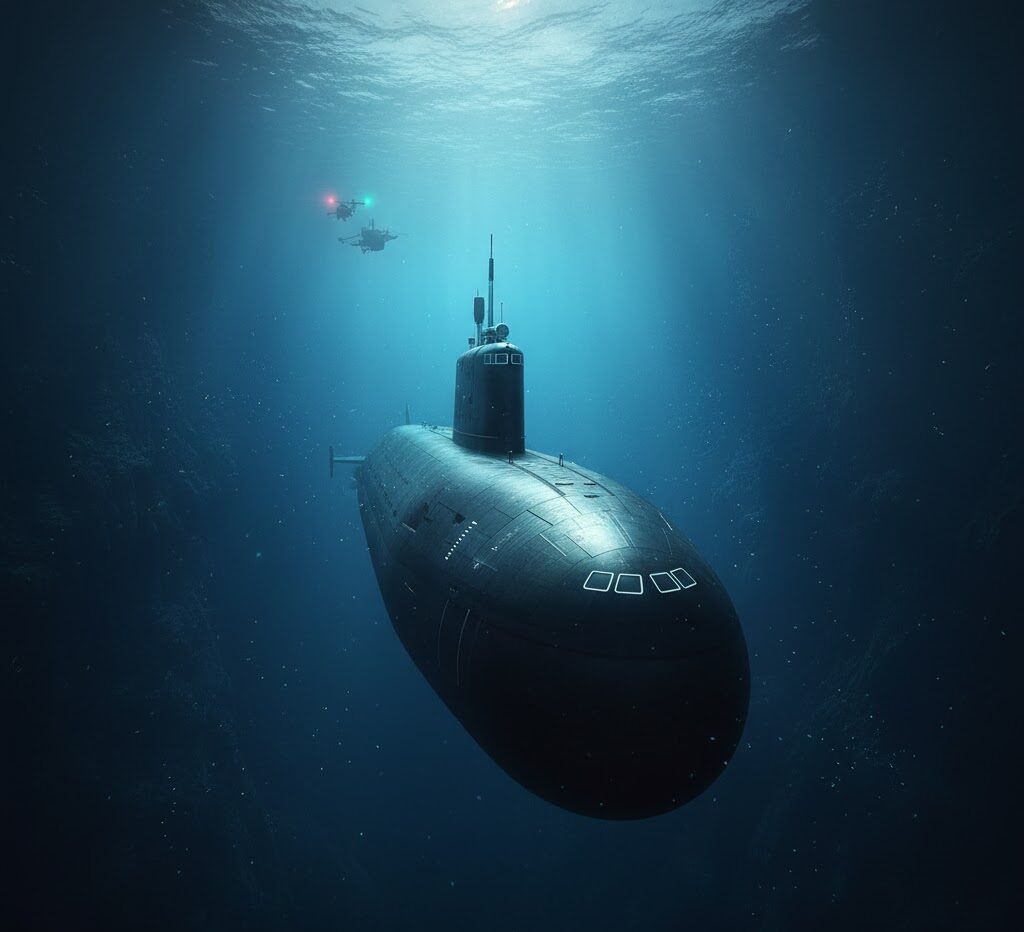
In the evolving theater of maritime power, few subjects command as much strategic attention as the operational deployment of nuclear assets. For the People’s Republic of China (PRC), the Type 094 (Jin-class) SSBN is central to its security doctrine. A detailed understanding of Type 094 submarine operations China executes is crucial for grasping Beijing’s nuclear deterrence strategy and the geopolitical shifts underway in the Indo-Pacific.
This comprehensive analysis delves into the technical specifications, strategic implications, and key operational areas associated with the Type 094 submarine operations China maintains, making it a definitive resource for military analysts and security enthusiasts.
The Strategic Leap: Why the Type 094 is Critical for China
The Type 094 represents China’s most significant naval achievement in its quest for a credible “second-strike” nuclear capability. This capability ensures that China can survive a massive first strike and still launch a devastating nuclear response from the relative safety of the ocean depths.
The Evolution of Naval Nuclear Strategy
Prior to the Type 094, China’s sea-based deterrent was rudimentary. The Jin-class SSBN fundamentally changed this by offering enhanced:
- Survivability: With a nuclear reactor, the Type 094 can remain submerged and on patrol for months, making it extremely difficult for adversaries to locate and track.
- Target Coverage: The integration of long-range missiles has dramatically expanded the areas that China can hold at risk, lending immense weight to its nuclear policy.
- Strategic Credibility: The regular execution of Type 094 submarine operations China has demonstrated its commitment to maintaining a robust, sea-based leg of its nuclear triad.
Core Capabilities and Patrol Profiles
The performance of the Type 094 is defined by its ability to remain undetected and its weapon payload. While foreign intelligence sources initially criticized the submarine’s acoustic signature, operational deployments suggest China has continuously worked to improve its stealth and combat effectiveness.
The Essential Role of the JL-2 and JL-3 Missiles
The backbone of the Type 094‘s deterrence lies in its 12 launch tubes, which house Submarine-Launched Ballistic Missiles (SLBMs).
| Missile Variant | Estimated Range | Warhead Capacity | Operational Impact |
| JL-2 | $\approx 7,000\text{ km}$ | Single Warhead | Provided initial regional deterrence and proof-of-concept for Type 094 submarine operations China |
| JL-3 | $> 10,000\text{ km}$ | MIRV (Multiple Warheads) | Enables global deterrence; places the entire Continental U.S. within striking range when launched from protected zones. |
The Operational Challenge: Stealth vs. Distance
The primary challenge in Type 094 submarine operations China faces is the trade-off between stealth (remaining close to home) and range (patrolling further out for better targeting). However, the introduction of the JL-3 mitigates this. Since the JL-3 can reach CONUS targets from patrol areas closer to the Chinese mainland, the SSBNs can operate with greater protection under the umbrella of China’s air and surface fleets.
Geopolitics: The South China Sea Bastion
The operational geography for the Type 094 is highly specific and strategic. The most likely zone for sustained Type 094 submarine operations China conducts is the deep, contested waters of the South China Sea (SCS).
Creating a Safe Haven
- Deep Water Protection: The SCS contains deep trenches that allow the large SSBNs to operate more effectively and evade detection by surface Anti-Submarine Warfare (ASW) assets.
- Homeport Proximity: The Longpo Naval Base on Hainan Island, with its deep-draft tunnels for protection, serves as the main hub. This allows for quick deployment and return, enhancing the frequency and efficiency of Type 094 submarine operations China executes.
- The “Bastion” Concept: By concentrating its naval and air assets in the SCS, China is attempting to create a nuclear submarine bastion—a highly defended operational zone that ensures the survivability of its deterrent force.
Global Implications of China’s Type 094 Submarine Operations
The consistent deployment of the Jin-class has far-reaching consequences for international security and naval strategies of competing powers.
Impact on Rival Navies
The successful Type 094 submarine operations China conducts necessitate a fundamental shift in ASW planning by the United States, Japan, and Australia. Resources must be heavily invested in:
- Detection Technologies: Developing advanced sensor arrays and drones capable of detecting the Type 094’s acoustic signature.
- Patrol Monitoring: Increasing the frequency and coverage of surveillance patrols in and around the SCS.
- Regional Alliances: Strengthening military cooperation with regional partners to share intelligence on Chinese SSBN movements.
China’s Future Deterrence
While the Type 094 is a breakthrough, it is viewed as an interim step toward the next-generation Type 096 SSBN. The lessons learned from the current Type 094 submarine operations China executes—particularly concerning acoustic quieting, crew training, and maintenance cycles—will directly inform the design and deployment of the more capable Type 096, which is expected to rival the stealth of Western designs.
Conclusion: The New Normal of Subsurface Competition
The Type 094 submarine operations China now regularly conducts signify a profound maturation of its naval and nuclear capabilities. The Jin-class has achieved its primary goal: establishing a credible and survivable sea-based second-strike capability that can threaten any adversary globally.
As China pushes the technological envelope with the forthcoming Type 096, the current phase of Type 094 submarine operations serves as a vital training ground and a powerful symbol of its rising status as a true global strategic power. The world’s oceans are now witnessing a new, silent race for strategic superiority, led by the patrol cycles of the Type 094.
Posts
FAFSA Trump: How Presidential Policies Reshaped Student Financial Aid
-
 news2 days ago
UK Housing Crisis Deepens: How London’s Affordability Crisis is Costing the Economy £7 Billion and Shaping the 2026 Political Landscape
-
 AI & Innovation2 days ago
UN Launches First-Ever Global AI Panel: How Artificial Intelligence is Reshaping Governance, Economy, and Society in 2026
-
 news2 days ago
UK Digital Economy Transformation: How AI and New Regulations Are Reshaping British Commerce in 2026
-
 news2 weeks ago
The Iran-Israel Military Confrontation of 2026: A Comprehensive Strategic Analysis
-
 news2 days ago
Global Trade Reaches $35 Trillion Milestone: 10 Critical Trends Reshaping International Commerce in 2026