

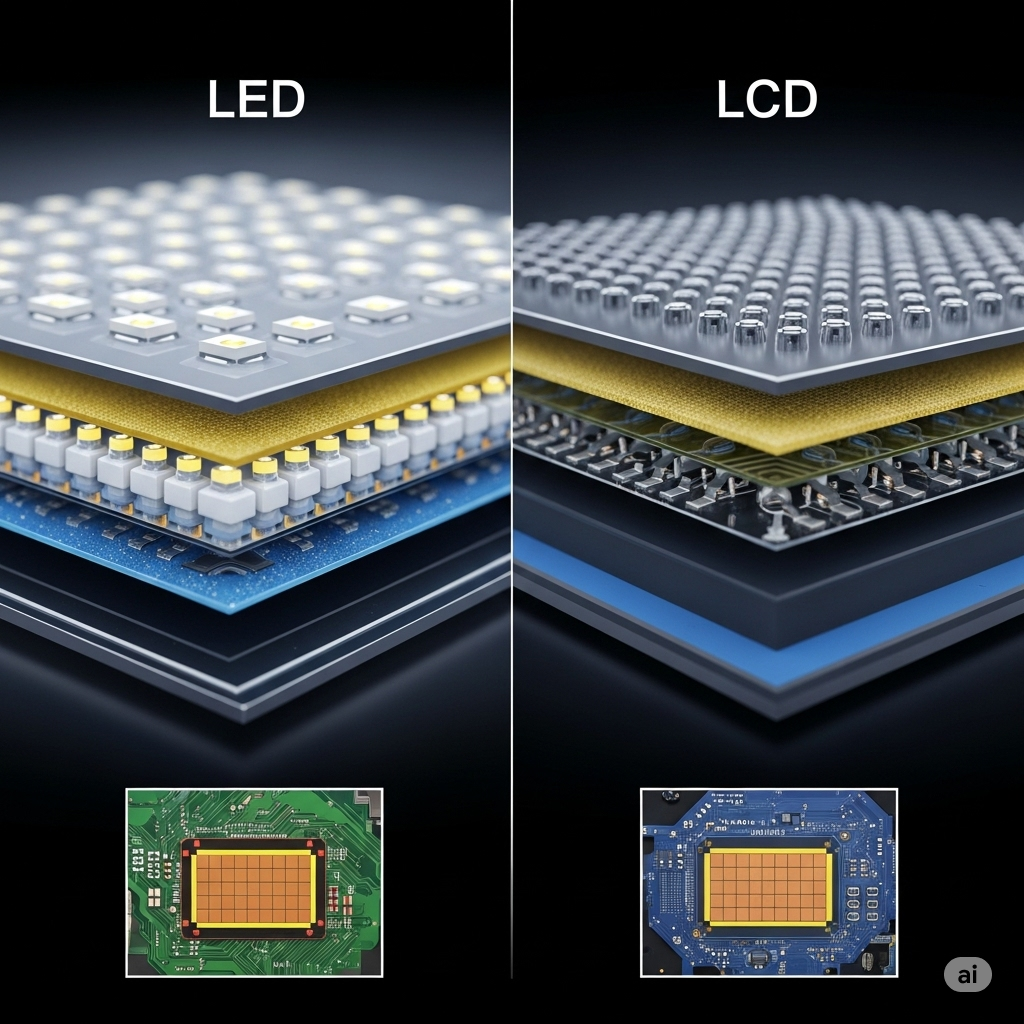
📺 Introduction
In today’s digital world, choosing the right screen technology can make a big difference in your viewing experience. Whether you’re buying a new TV, monitor, or smartphone, you’ll likely come across two common display types: LED and LCD.
But what exactly is the difference between LED and LCD? And which one should you choose in 2025?
This article breaks it down in simple terms so you can make an informed, tech-savvy decision. We’ll also explore advanced display variations and key considerations to help you choose the right screen for your home, office, or gaming setup.
🔍 What is LCD?
LCD stands for Liquid Crystal Display. It uses liquid crystals sandwiched between two layers of glass or plastic and a backlight to produce images.
How it works:
- Light from a fluorescent lamp (usually CCFL) passes through a polarizing layer.
- Liquid crystals manipulate the light to form images.
- A color filter adds color to the grayscale images formed by the crystals.
Key Features:
- Requires fluorescent backlighting
- Produces images by filtering light through liquid crystals
- Commonly found in budget TVs, monitors, calculators, digital watches
Pros:
- Low production costs
- Good for general use
- Energy efficient compared to older tech like CRT
Cons:
- Weaker contrast and color accuracy
- Slower response times
- Less energy efficient than LED
💡 What is LED?
LED stands for Light Emitting Diode, and LED displays are a subset of LCD technology that uses LED backlights instead of CCFLs.
How it works:
- A panel of white or RGB LEDs emits light behind or on the edge of the LCD panel.
- Provides more precise lighting and dynamic contrast.
Types of LED Displays:
- Edge-Lit LED: LEDs placed along the edges; allows for thinner displays.
- Full-Array LED: LEDs placed evenly behind the panel for better contrast.
- Mini-LED (2025 trend): Uses thousands of tiny LEDs for sharper brightness control.
Pros:
- Slimmer designs
- Higher brightness and contrast
- Greater color accuracy and energy efficiency
- Longer lifespan than standard LCDs
Cons:
- Costlier than LCDs
- Edge-lit models may have uneven lighting
🆚 LED vs LCD: Key Differences
| Feature | LCD | LED |
|---|---|---|
| Backlighting | CCFL (fluorescent) | LED (light-emitting diode) |
| Brightness | Moderate | High |
| Energy Efficiency | Medium | High |
| Color Accuracy | Average | Better |
| Lifespan | Shorter | Longer |
| Viewing Angles | Narrower | Wider (especially IPS LEDs) |
| Cost | Lower | Slightly higher |
Learn more about emerging display technologies and their applications at SpaceCoastDaily.co.uk
📱 Advanced Variants to Consider in 2025
🔹 QLED (Quantum Dot LED)
- Developed by Samsung
- Uses quantum dots to improve color range and brightness
- Better than LED in terms of vibrancy
🔹 OLED (Organic LED)
- Individual pixels emit light (no backlight needed)
- Excellent black levels, contrast, and ultra-slim design
- More expensive, used in high-end TVs and smartphones
🔹 Mini-LED
- Offers better control over dimming zones
- Reduces halo effects and improves dynamic range
- Becoming mainstream in high-end monitors and TVs
These technologies often build upon LED panels, offering better performance at a higher price.
📊 Use Cases: Which One Is Better for You?
📺 For Watching TV
- LED TVs are ideal due to better brightness, energy use, and sleek designs.
- Go for Full-Array LED for optimal movie experience.
💻 For Office Work
- LCD monitors are sufficient for word processing, browsing, and spreadsheets.
- LED provides less eye strain over long periods — recommended.
🎮 For Gaming
- LED monitors with high refresh rates and low response times are superior.
- Avoid basic LCDs due to ghosting and lag.
📱 For Smartphones/Tablets
- LED and OLED dominate the mobile space due to high-quality visuals and efficiency.
🧠 Final Thoughts
While LCD and LED both belong to the same display technology family, LED is significantly superior in most categories that matter to users today — including brightness, energy use, durability, and visual quality.
In 2025, unless you’re shopping on a very tight budget, LED should be your default choice. However, be aware of more advanced options like Mini-LED or OLED if your usage includes creative work, high-end gaming, or home cinema setups.
Looking for more tech comparisons and practical guides? Visit SpaceCoastDaily.co.uk for regularly updated articles and smart recommendations.
❓FAQ: LED vs LCD
Q1: Is LED better than LCD?
Yes. LED is generally better due to its superior brightness, contrast, and energy efficiency.
Q2: Do LED TVs last longer than LCD?
Yes, they tend to have longer lifespans and better reliability.
Q3: Are LED screens more expensive?
Slightly, but they offer better value over time.
Q4: Can I use an LCD monitor for gaming?
Yes, but modern LED monitors are much better suited for gaming due to faster refresh rates.
Q5: Is OLED the same as LED?
No. OLED is a different, more advanced technology that offers individually lit pixels and deeper blacks.
Q6: What is Mini-LED and should I consider it?
Mini-LED is a newer version of LED offering improved contrast and brightness. It’s ideal for professionals and enthusiasts.














Leave a Reply