

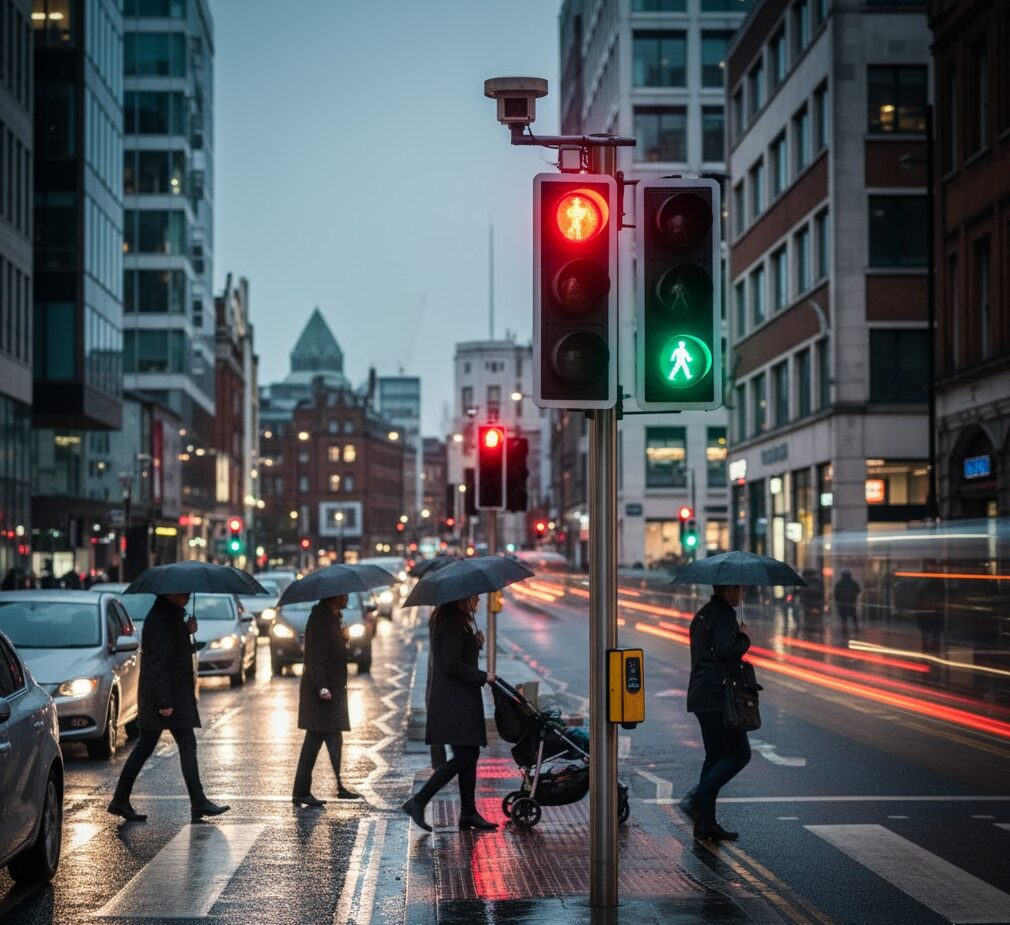
In the bustling landscape of modern urban traffic, the humble pedestrian crossing has undergone a remarkable evolution. Among the most advanced systems deployed today is the Puffin crossing, a technological upgrade designed to enhance safety and efficiency for everyone using the road. Unlike its predecessors, the Puffin crossing uses intelligent sensors to dynamically manage crossing times, creating a more responsive and intuitive experience. This article delves into the mechanics, benefits, and practical impact of Puffin crossings, exploring why they represent a significant step forward in urban planning and public safety.
What is a Puffin Crossing?
A Puffin crossing short for “Pedestrian User-Friendly Intelligent” crossing is a type of signal-controlled pedestrian crossing commonly found in the United Kingdom and other countries. It replaces the older Pelican crossing system with a more sophisticated, sensor-based approach.
Key Components and How It Works
The core innovation of a Puffin crossing lies in its use of detection technology to monitor pedestrian activity in real-time.
- On-crossing Pedestrian Detectors (OPD): These are infrared or thermal cameras mounted on the traffic signal pole on the near side of the road. They detect pedestrians who are still on the crossing when the green man signal has ended.
- Pedestrian Wait Detectors: These sensors determine if someone is waiting to cross. If no one is detected, the crossing cycle may not be initiated unnecessarily, improving traffic flow.
- Near-side Signal Units: Unlike Pelican crossings, the signal lights for pedestrians are located on the same side as the waiting person, right next to the push-button unit. This allows pedestrians to easily monitor both the traffic and their signal without turning their head.
The operational sequence is intelligent:
- A pedestrian presses the button to request a crossing.
- The wait detector confirms their presence.
- The traffic lights cycle to red for vehicles, and the pedestrian signal shows a green man.
- The on-crossing detector monitors the crossing. The traffic lights will only turn green for vehicles once the crossing is completely clear, ensuring no one is stranded.
Puffin vs. Other Crossings: A Comparative Analysis
To understand the Puffin’s advantages, it’s helpful to compare it with other common crossing types.
| Feature | Puffin Crossing | Pelican Crossing | Zebra Crossing |
|---|---|---|---|
| Pedestrian Signals | On the near-side (next to the button) | On the far-side of the road | None |
| Control Mechanism | Intelligent sensors and push-button | Fixed-time cycle and push-button | Give-way markings (no signals) |
| Crossing Time | Variable, based on sensor detection | Fixed, with a flashing amber phase for vehicles | Uncontrolled, pedestrians have priority |
| Key Safety Feature | Holds red traffic light until crossing is clear | Flashing amber phase requires caution | Driver obligation to stop |
Key Differences Explained
- Puffin vs. Pelican: The most significant difference is the elimination of the flashing amber phase. On a Pelican, vehicles see a flashing amber light, indicating they can proceed if the crossing is clear. This places the responsibility on the driver and can be dangerous. Puffins remove this ambiguity by holding the red light for vehicles until the crossing is completely empty.
- Puffin vs. Zebra: A Zebra crossing has no traffic lights and relies entirely on driver awareness and courtesy. While effective in low-traffic areas, they can be less safe and cause more significant traffic delays on busy roads compared to a signal-controlled Puffin.
The Tangible Benefits of Puffin Crossings
The design of the Puffin crossing offers a multitude of advantages for both pedestrians and the overall traffic system.
Enhanced Pedestrian Safety
The primary benefit is a substantial increase in safety. By using sensors to ensure no one is on the crossing before traffic resumes, the system virtually eliminates the risk of pedestrians being caught in the middle of the road when the lights change. This is particularly beneficial for:
- Elderly and disabled individuals who may need more time to cross.
- Children who might be slower or less predictable.
- Anyone who might trip or drop something while crossing.
Improved Traffic Flow
While safety is paramount, Puffin crossings are also designed with efficiency in mind.
- The system does not run on a fixed timer. If a pedestrian crosses quickly, the traffic light can change back to green sooner.
- Conversely, if someone is slow, the red light is extended accordingly.
- The wait detectors prevent the crossing cycle from activating when no one is present, reducing unnecessary stops for drivers.
A More User-Friendly Experience
The near-side signals make the crossing process more intuitive. Pedestrians can keep an eye on the traffic and the signal light simultaneously, which feels more natural and secure than looking up and away at a far-side signal.
How to Use a Puffin Crossing Correctly
For pedestrians and drivers alike, using a Puffin crossing is straightforward.
For Pedestrians
- Press the Button: Locate and press the request button on the signal pole.
- Wait for the Green Man: Stand near the detector and wait for the steady green man signal to appear on the near-side unit. Do not cross on the red man.
- Cross with Confidence: The sensors will ensure you have enough time. The green man will remain lit as long as you are detected on the crossing.
- No Flashing Phase: Remember, there is no flashing green man or countdown timer. Simply wait for the green man and cross.
For Drivers and Cyclists
- Observe the Traffic Lights: The sequence is the standard red, amber, green.
- Stop on Red: Come to a complete stop when the light is red.
- Wait for Green: Do not anticipate the light change. The red light will only turn green once the on-crossing sensors confirm the crossing is completely clear. There is no flashing amber phase to interpret.
The Future of Pedestrian Crossings
The Puffin crossing represents a clear move towards intelligent, adaptive urban infrastructure. The principles it uses—real-time detection and dynamic response—are the foundation for the future of smart cities. We can expect to see further integration with:
- Connected Vehicle Technology: Where traffic signals can communicate directly with cars.
- Data Analytics: Using crossing data to optimize traffic light timings across entire city networks.
- Accessibility Enhancements: Even more sophisticated systems to assist visually impaired and mobility-challenged pedestrians.
The success of the Puffin crossing demonstrates that with thoughtful design and technology, we can create environments that are simultaneously safer for people and more efficient for traffic.
Frequently Asked Questions (FAQs)
1. What does “Puffin” stand for?
Puffin is an acronym for “Pedestrian User-Friendly Intelligent” crossing. The name highlights its core feature: an intelligent, sensor-based system designed for user safety and convenience.
2. How does the Puffin crossing know I’m still crossing?
It uses On-crossing Pedestrian Detectors (OPD), which are typically small cameras or infrared sensors mounted on the signal pole. These continuously scan the crossing area and can detect if people are still present.
3. Why are there no countdown timers on Puffin crossings?
Because the crossing time is variable and controlled by the sensors. A fixed countdown timer would be inaccurate. The system itself ensures you have enough time, making a public timer unnecessary.
4. Is it illegal to drive through a Puffin crossing on red?
Yes. The rules are the same as for any other red traffic light. Driving through a red light at any crossing is a serious traffic offense and can result in a fine and penalty points on your license.
5. What should I do if the green man doesn’t appear after I press the button?
First, ensure you are standing where the wait detector can see you. If it still doesn’t change, the crossing may be malfunctioning. Wait for a safe gap in traffic, just as you would at an unmarked crossing, and report the fault to the local council or transportation authority.
6. Are Puffin crossings more expensive than other types?
Yes, the advanced sensor technology and more complex control systems make Puffin crossings more expensive to install than Pelican or Zebra crossings. However, this cost is often justified by the significant improvements in safety and traffic flow.
7. Can I find Puffin crossings outside the UK?
While most common in the UK, the design principles of intelligent, sensor-based crossings are being adopted in various forms in other countries, including Ireland, Australia, and New Zealand, as part of a global trend towards smarter traffic management.











Leave a Reply