

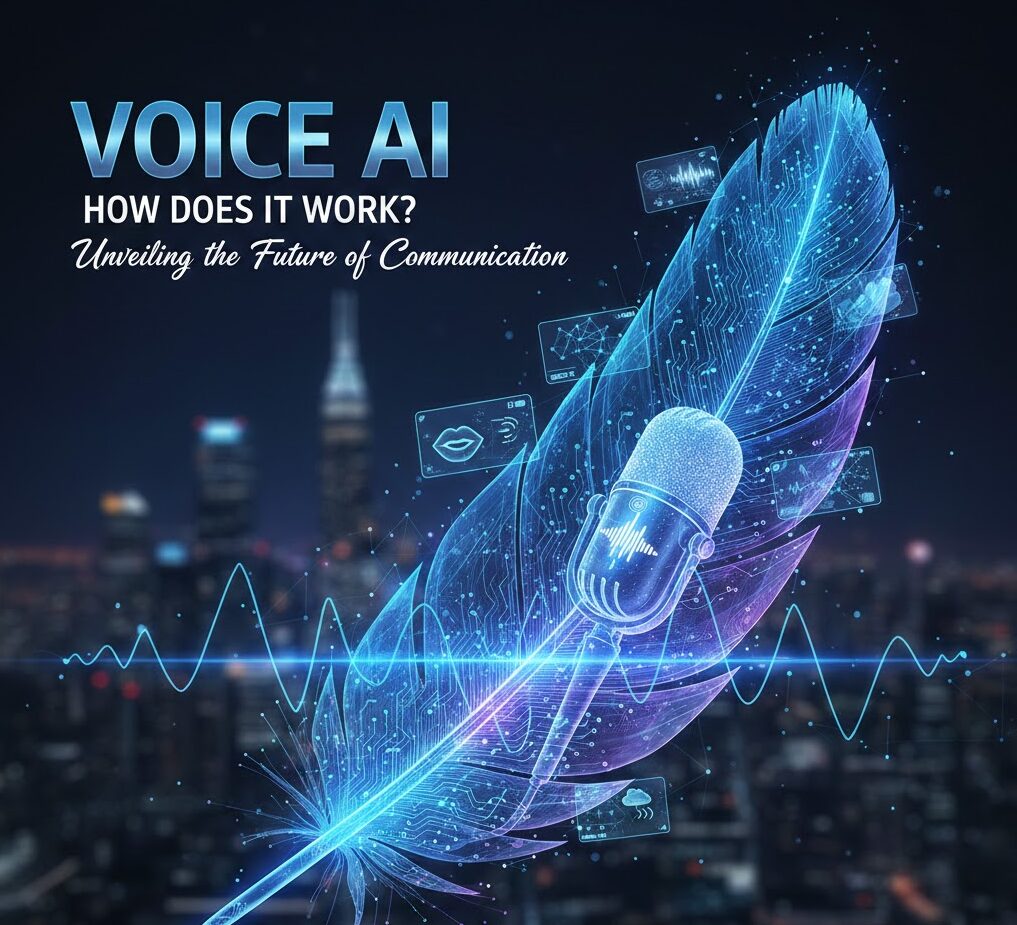
Voice AI is rapidly changing the way humans interact with technology. From asking virtual assistants questions to controlling smart devices using voice commands, this technology has become a core part of modern digital life. But what exactly is Voice AI, and how does it work behind the scenes?
In this article, we’ll explain Voice AI in simple terms, how it works step by step, where it’s used, and why it’s becoming so important in 2025 and beyond.
What Is Voice AI?
Voice AI (Voice Artificial Intelligence) is a technology that allows machines and software to understand, process, and respond to human speech.
In simple words:
👉 You speak → the system understands → it replies or performs an action.
Voice AI combines several advanced technologies such as:
-
Speech recognition
-
Natural language processing (NLP)
-
Machine learning
-
Text-to-speech synthesis
Examples you may already know:
-
Google Assistant
-
Siri
-
Alexa
-
Voice chatbots on websites
-
Automated customer support calls
How Does Voice AI Work? (Step-by-Step)
Voice AI may feel magical, but it follows a clear technical process.
1️⃣ Voice Input (Speech Recognition)
When you speak into a device:
-
Your voice is captured by a microphone
-
Sound waves are converted into digital signals
This process is called Automatic Speech Recognition (ASR).
2️⃣ Converting Speech to Text
The system converts spoken words into written text using AI models trained on millions of voice samples.
For example:
🎙️ “What is the weather today?”
➡️ Text: What is the weather today?
3️⃣ Understanding the Meaning (Natural Language Processing)
Now the AI tries to understand:
-
What you are asking
-
Your intent
-
Keywords and context
This step uses Natural Language Processing (NLP) to analyze grammar, meaning, and intent.
4️⃣ Decision & Response Generation
Once the intent is clear, the AI:
-
Finds the best answer
-
Pulls data from databases or the internet
-
Decides what action to take
For example:
-
Answer a question
-
Turn on a smart device
-
Book an appointment
5️⃣ Voice Output (Text-to-Speech)
Finally, the response is converted back into a natural-sounding voice using Text-to-Speech (TTS) technology.
This is how Voice AI “talks back” to you.
Real-Life Uses of Voice AI
Voice AI is not limited to smartphones. It’s being used across many industries.
🔹 Smart Devices
-
Smart speakers
-
Smart TVs
-
Home automation systems
🔹 Customer Support
-
AI call center agents
-
Automated IVR systems
-
Voice bots handling FAQs
🔹 Healthcare
-
Voice-enabled medical notes
-
Virtual health assistants
-
Appointment scheduling
🔹 Automotive Industry
-
Voice-controlled navigation
-
Hands-free calling
-
In-car assistants
🔹 Education & Accessibility
-
Voice learning tools
-
Speech-to-text for disabled users
-
Language learning assistants
Benefits of Voice AI
✅ Hands-Free Convenience
Users can interact without typing or touching devices.
✅ Faster Interaction
Speaking is usually faster than typing.
✅ Accessibility
Helps elderly and disabled users access technology.
✅ Scalable for Businesses
Companies can handle thousands of voice queries simultaneously.
Limitations of Voice AI
Despite its advantages, Voice AI still has challenges.
❌ Accent & Language Issues
Some systems struggle with accents or regional dialects.
❌ Privacy Concerns
Voice recordings may raise data privacy questions.
❌ Context Limitations
Complex or emotional conversations can still confuse AI.
Is Voice AI Safe to Use?
Voice AI systems are generally safe, but users should:
-
Review privacy settings
-
Avoid sharing sensitive personal information
-
Use trusted platforms only
As regulations and AI ethics improve, Voice AI security is also becoming stronger.
Future of Voice AI
Voice AI is expected to become:
-
More human-like
-
Emotion-aware
-
Multilingual by default
-
Deeply integrated into daily life
In the future, voice may replace keyboards and screens for many digital interactions.
FAQs About Voice AI
❓ Is Voice AI the same as Chatbots?
No. Chatbots are text-based, while Voice AI interacts using speech.
❓ Does Voice AI require the internet?
Most advanced Voice AI systems need the internet, though some basic features work offline.
❓ Can Voice AI understand emotions?
Some advanced systems can detect tone and emotion, but it’s still evolving.
Final Thoughts
Voice AI is no longer a futuristic idea — it’s already shaping how we communicate with technology. As AI models become smarter and more natural, voice-based interaction will continue to grow across industries and everyday life.
Understanding how Voice AI works helps users and businesses take full advantage of this powerful technology.



Leave a Reply