

Introduction
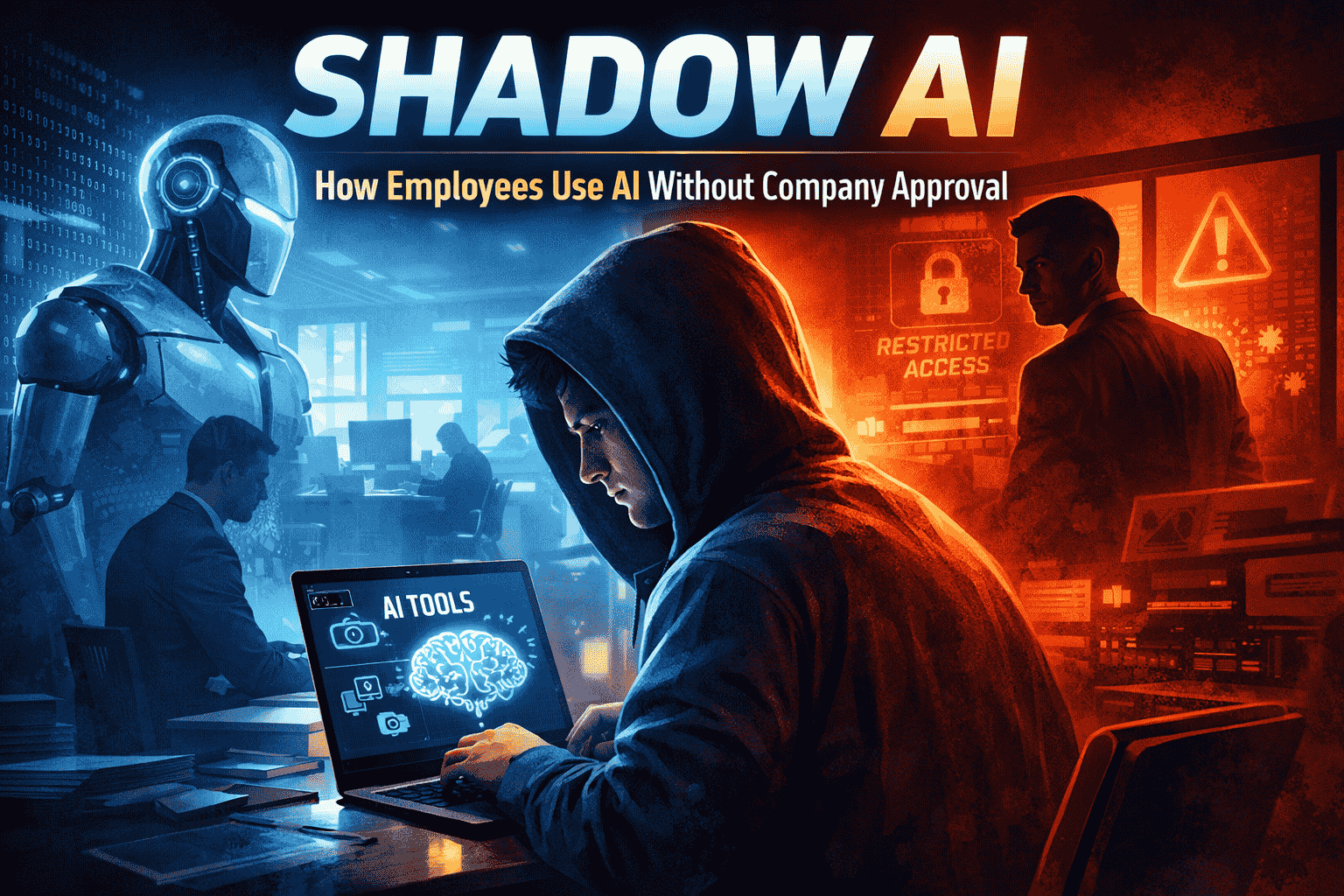
Artificial Intelligence (AI) has rapidly transformed how modern workplaces operate. From drafting emails to analyzing data, AI tools promise speed, efficiency, and smarter decision-making. However, a new and largely hidden trend is quietly growing inside organizations worldwide Shadow AI.
Shadow AI refers to the use of AI tools by employees without official company approval or oversight. While often well-intentioned, this invisible adoption of AI presents serious risks related to data security, compliance, ethics, and organizational trust.
In this article, we will explore what Shadow AI is, why employees are using it secretly, real-world examples, risks for businesses, and how organizations can respond responsibly.
What Is Shadow AI?
Shadow AI is the unauthorized use of artificial intelligence tools, platforms, or services by employees within a company environment.
These tools are often:
-
Public AI chatbots
-
AI writing assistants
-
Image or video generators
-
Data analysis tools
-
Code-generation platforms
Employees may use them to complete tasks faster without informing IT departments, managers, or compliance teams.
Shadow AI is similar to “Shadow IT,” but with much higher risks because AI systems can process, store, and learn from sensitive data.
Why Employees Use Shadow AI Without Approval
Despite corporate policies, employees increasingly turn to AI tools on their own. Here’s why:
1. Pressure to Be More Productive
Workplaces are more demanding than ever. Employees feel pressure to:
-
Meet tight deadlines
-
Produce higher output
-
Compete with AI-powered colleagues
AI tools offer instant assistance making them tempting shortcuts.
2. Slow Corporate AI Adoption
Many companies take months (or years) to approve new technologies due to:
-
Security reviews
-
Legal concerns
-
Budget approvals
Employees don’t want to wait so they act independently.
3. Ease of Access
Most AI tools require:
-
No installation
-
No company credentials
-
Just a browser and internet
This low barrier encourages silent adoption.
4. Lack of Clear AI Policies
In many organizations:
-
AI policies don’t exist
-
Or are vague and outdated
Employees assume “if it’s not forbidden, it’s allowed.”
Common Examples of Shadow AI in the Workplace
Shadow AI is more common than most companies realize. Typical examples include:
-
Using AI chatbots to summarize confidential documents
-
Uploading internal data to AI tools for analysis
-
Generating client emails or proposals using public AI platforms
-
Using AI to write code that integrates with company systems
-
Creating marketing content using AI tools without brand review
These actions often happen daily unnoticed.
The Hidden Risks of Shadow AI
While Shadow AI may improve short-term productivity, it introduces serious long-term risks.
1. Data Security & Privacy Risks
Many AI tools:
-
Store user inputs
-
Train future models on submitted data
-
Operate outside company-controlled servers
This means sensitive data such as:
-
Client information
-
Financial records
-
Internal strategies
could be exposed or misused.
2. Compliance & Legal Issues
Shadow AI can violate:
-
GDPR (UK/EU)
-
Data protection laws
-
Industry regulations
Even if an employee acts independently, the company remains legally responsible.
3. Loss of Intellectual Property
Employees may unknowingly feed:
-
Trade secrets
-
Proprietary methods
-
Confidential algorithms
into third-party AI systems permanently losing ownership.
4. Inaccurate or Biased Outputs
AI tools can:
-
Generate false information
-
Reflect bias
-
Hallucinate facts
Without oversight, bad outputs can damage:
-
Brand reputation
-
Client trust
-
Business decisions
5. Ethical & Trust Concerns
Shadow AI erodes:
-
Transparency
-
Accountability
-
Trust between employees and leadership
It creates a culture of secrecy instead of innovation.
Why Shadow AI Is Growing So Fast
Shadow AI isn’t slowing down it’s accelerating.
Key reasons include:
-
Explosion of free AI tools
-
Remote and hybrid work models
-
Rising competition and automation fears
-
Employees wanting to stay relevant
Many workers see AI as a survival tool, not a threat.
Shadow AI vs Approved Enterprise AI
| Feature | Shadow AI | Approved AI |
|---|---|---|
| Approval | No | Yes |
| Oversight | None | Full governance |
| Data Control | External | Internal |
| Compliance | Risky | Audited |
| Security | Unknown | Enforced |
Shadow AI fills a gap but unsafely.
How Companies Can Address Shadow AI (Without Banning It)
Banning AI completely is unrealistic. Smart organizations focus on control, education, and trust.
1. Create Clear AI Usage Policies
Policies should clearly define:
-
Allowed tools
-
Prohibited uses
-
Data handling rules
Clarity reduces risky behavior.
2. Provide Approved AI Alternatives
If employees need AI:
-
Offer secure, internal AI tools
-
Integrate AI into workflows
People use Shadow AI when no safe option exists.
3. Educate Employees
Training should explain:
-
AI risks
-
Data privacy concerns
-
Responsible AI usage
Education works better than punishment.
4. Encourage Transparency
Create a culture where employees feel safe to:
-
Suggest AI tools
-
Report usage
-
Collaborate on innovation
5. Monitor Without Micromanaging
Use governance frameworks not surveillance to:
-
Track AI adoption trends
-
Identify risks early
Is Shadow AI Always Bad?
Not entirely.
Shadow AI highlights:
-
Innovation gaps
-
Employee needs
-
Inefficient systems
If managed correctly, Shadow AI can become a signal — not a threat.
The Future of Shadow AI
As AI becomes more powerful:
-
Shadow AI will increase
-
Regulation will tighten
-
Companies must adapt quickly
Organizations that embrace responsible AI adoption will outperform those that ignore or fear it.
Final Thoughts
Shadow AI is no longer a fringe issue it’s a mainstream workplace reality.
Employees are already using AI. The real question is whether companies will:
-
Fight it blindly
-
Or guide it intelligently
The future belongs to organizations that balance innovation, security, and trust without driving AI usage underground.
More intresting Posts
Is Janitor AI Safe to Use? (Privacy & Risks Explained)


Leave a Reply