

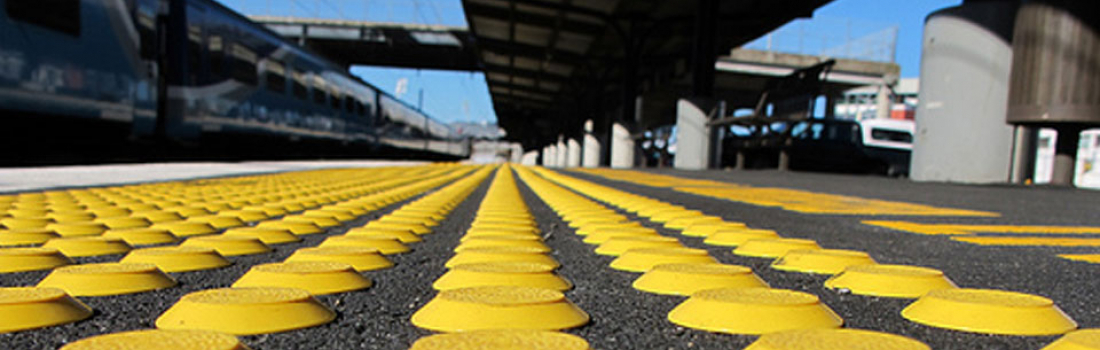
Imagine navigating a bustling city street or a vast shopping mall – but without sight. For people who are blind or have low vision, navigating unfamiliar environments can be a daunting challenge. Thankfully, a discreet yet impactful solution exists: Tactile Indicators. These textured tiles, often found embedded in pavements or walkways, provide a crucial sense of direction and warning for visually impaired individuals.
Understanding TGSIs: A Sensory Aid for Safe Navigation
TGSIs are more than just bumps on the ground. These strategically placed indicators, composed of raised studs, lines, or grids, create a tactile language that people who are blind or have low vision can feel with their feet or a cane. The variations in texture and pattern communicate vital information:
- Directional Guidance: Linear patterns of raised bars or studs guide pedestrians along a safe path, particularly at intersections or changes in direction.
- Warning Zones: Distinctive surface textures, like grids of raised dots, signal potential hazards like upcoming stairs, escalators, or changes in floor level, allowing for a safe and prepared approach.
The Importance of TGSIs in Creating Inclusive Spaces
TGSIs play a critical role in promoting independent mobility for the visually impaired. Here’s how:
- Increased Confidence: By providing a clear path and alerting them to potential hazards, TGSIs empower people who are blind or have low vision to navigate unfamiliar environments with greater confidence.
- Reduced Reliance on Assistance: TGSIs enable individuals to navigate independently, promoting a sense of self-reliance and dignity.
- Enhanced Safety: Timely warnings about upcoming obstacles minimize the risk of accidents and injuries.
Beyond Functionality: The Ripple Effect of Inclusivity
The benefits of TGSIs extend beyond the visually impaired community. These indicators contribute to a more inclusive environment for everyone:
- Improved Pedestrian Flow: Clear directional cues through TGSIs can benefit all pedestrians, promoting smoother traffic flow and reducing congestion.
- Universal Design: The presence of TGSIs reflects a commitment to creating spaces that are accessible and usable by everyone, regardless of ability.
- Societal Impact: Widespread use of TGSIs demonstrates a society that prioritizes the needs of all its citizens, fostering a sense of belonging and inclusivity.
The Future of TGSIs: Innovation and Integration
The world of TGSIs is constantly evolving. New materials and manufacturing processes are leading to the development of more durable and aesthetically pleasing indicators. Integration with smart technologies is also on the horizon, with potential for TGSIs to provide audio or visual information alongside the tactile cues.
Feeling the Way Forward
TGSIs are a powerful testament to the impact of thoughtful design. These seemingly simple textured surfaces contribute significantly to a more inclusive and accessible world. By feeling their way through the built environment, people who are blind or have low vision can navigate with confidence, promoting their independence and participation in society. As we move forward, the continued development and integration of TGSIs will ensure that everyone can feel their way forward, safely and confidently.















Leave a Reply