

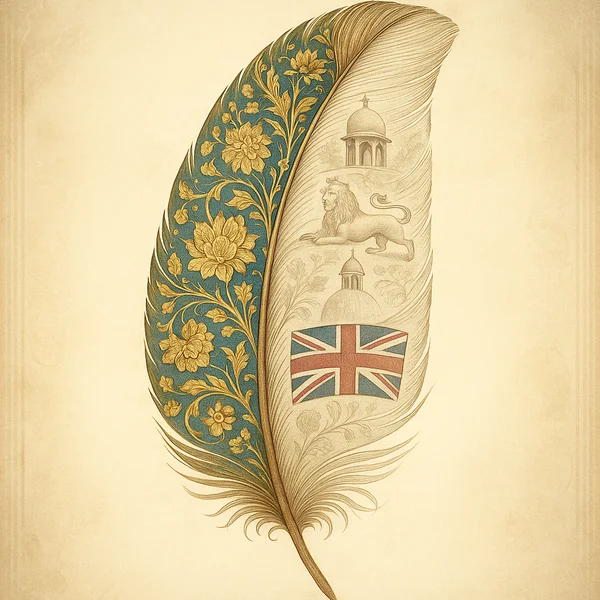
Hey there, history buffs! Imagine stepping back in time to the vibrant lands of India, where two colossal empires once reigned supreme, shaping the destiny of a subcontinent. On one side, the grand Mughal Empire, with its opulent palaces, intricate art, and legendary rulers like Akbar and Shah Jahan. On the other, the British Empire, arriving as traders but evolving into colonial overlords with railways, bureaucracy, and a lasting imprint on modern India. If you’ve ever wondered how these two powerhouses stacked up against each other—politically, economically, culturally, and beyond—you’re in for a treat. In this deep dive, we’ll explore the British vs Mughal empires in India, comparing their rises, reigns, and legacies. Buckle up; this comparative look promises fascinating insights into how empires build, rule, and eventually fade.
As an avid history enthusiast myself, I’ve always been captivated by how these empires influenced India’s trajectory. The Mughals brought Persian flair and Islamic governance, while the British introduced Western education and industrial might. But what were the key differences and similarities? Let’s break it down step by step, with plenty of examples and real-world context to make it all come alive.
Historical Background: Setting the Stage for Empire
To truly appreciate the British vs Mughal comparison, we need to rewind the clock and understand their origins. Both empires didn’t just appear out of thin air—they were products of ambition, conquest, and circumstance.
The Rise of the Mughal Empire
The Mughal Empire kicked off in the early 16th century when Babur, a descendant of Timur and Genghis Khan, invaded India from Central Asia. His victory at the Battle of Panipat in 1526 marked the beginning of Mughal dominance. Over the next two centuries, under emperors like Akbar, Jahangir, Shah Jahan, and Aurangzeb, the empire expanded to cover most of the Indian subcontinent.
What made the Mughals so successful? For starters, their military prowess was unmatched. They used innovative tactics, like gunpowder artillery, and integrated local Hindu rulers through alliances and marriages. Akbar’s policy of religious tolerance, known as Sulh-e-Kul (peace with all), helped unify diverse populations. By the time of Shah Jahan, the empire was a cultural powerhouse, boasting wonders like the Taj Mahal—a testament to Mughal architecture blending Persian, Islamic, and Indian styles.
Fun fact: At its peak in the 17th century, the Mughal Empire controlled about 25% of the world’s GDP. That’s right—this wasn’t just a regional player; it was a global economic giant.
The Advent of the British in India
Fast-forward to the 17th century, and enter the British East India Company (EIC). Initially chartered in 1600 for trade, the EIC started as spice merchants but quickly morphed into a colonial force. Their foothold began with trading posts in places like Surat and Madras, but the real turning point was the Battle of Plassey in 1757, where Robert Clive defeated the Nawab of Bengal with superior strategy and local alliances.
Unlike the Mughals’ direct conquest, the British expanded through “divide and rule” tactics, pitting Indian princes against each other. By 1858, after the Indian Rebellion of 1857 (also called the Sepoy Mutiny), the British Crown took direct control, ushering in the Raj era that lasted until 1947.
Key difference? The Mughals integrated into Indian society, adopting local customs, while the British often viewed themselves as outsiders, imposing Victorian values from afar. This outsider perspective would later fuel independence movements.
Political Structure and Governance: How They Ruled the Roost
Governance is where the British vs Mughal empires really diverge. One emphasized centralized absolutism with a touch of inclusivity, while the other brought bureaucratic efficiency laced with exploitation.
Mughal Administration: A Blend of Tradition and Innovation
The Mughals operated under a monarchical system where the emperor was the ultimate authority, often seen as semi-divine. Akbar’s Mansabdari system ranked officials based on military contributions, ensuring loyalty through land grants (jagirs).
- Key Features:
- Decentralized yet controlled: Provinces were governed by subahdars, but the emperor’s court in Agra or Delhi pulled the strings.
- Religious policies: Akbar’s Din-i-Ilahi promoted harmony, though Aurangzeb’s orthodox Islam alienated non-Muslims.
- Justice system: Based on Sharia law with local adaptations, emphasizing quick resolutions.
This structure fostered stability but crumbled under weak successors and internal strife.
British Colonial Governance: Bureaucracy and Control
The British Raj was a masterclass in administrative overhaul. They introduced the Indian Civil Service (ICS), a merit-based bureaucracy that replaced Mughal-style patronage.
- Key Features:
- Viceroy-led hierarchy: The Viceroy represented the British monarch, overseeing provinces with governors.
- Legal reforms: Codified laws like the Indian Penal Code (1860) blended English common law with Indian traditions.
- Divide and rule: Policies like the partition of Bengal (1905) exacerbated communal tensions for control.
While efficient, this system often prioritized British interests, leading to famines and unrest. Insight: The British built over 40,000 miles of railways, not just for trade but to move troops swiftly— a stark contrast to the Mughals’ reliance on roads and forts.
Economic Policies and Impact: Wealth, Trade, and Exploitation
Economies tell a tale of ambition. The Mughal Empire thrived on agriculture and luxury goods, while the British turned India into a raw material supplier for their industrial machine.
Mughal Economic Golden Age
Under the Mughals, India was an exporter of textiles, spices, and jewels. The empire’s economy was agrarian, with the Zabt system taxing farmers based on crop yields.
- Prosperity Boosters:
- Trade networks: Links to Europe, Persia, and Southeast Asia via ports like Surat.
- Artisan crafts: Famous for Mughal miniatures, carpets, and jewelry, employing millions.
- Challenges: Heavy taxation under Aurangzeb strained peasants, leading to revolts.
At its height, the empire’s revenue was immense, funding architectural marvels and a lavish court.
British Economic Exploitation
The British flipped the script, deindustrializing India to favor British goods. Policies like the Permanent Settlement (1793) fixed land revenues, often benefiting zamindars over farmers.
- Key Impacts:
- Drain of wealth: Economists estimate Britain extracted trillions in today’s dollars through unequal trade.
- Industrial shift: India became a cotton supplier for British mills, crippling local weavers (remember the Bengal famine of 1770?).
- Infrastructure: Canals and telegraphs boosted trade but primarily served colonial needs.
Comparative insight: While Mughals reinvested wealth locally (e.g., building mosques and gardens), the British siphoned it abroad, contributing to India’s poverty by independence.
Cultural and Social Influences: Lasting Imprints on Indian Society
Empires don’t just conquer land; they reshape cultures. Here’s where the British vs Mughal legacies shine.
Mughal Cultural Flourish
The Mughals were cultural synthesizers, blending Persian, Turkish, and Indian elements.
- Highlights:
- Architecture: Taj Mahal, Red Fort—symbols of Indo-Islamic style.
- Arts and Literature: Urdu language evolved, with poetry by Ghalib and music like Hindustani classical.
- Social reforms: Akbar abolished the jizya tax on non-Muslims, promoting interfaith marriages.
This era saw a golden age of tolerance, though later rulers like Aurangzeb imposed stricter Islamic norms.
British Social Reforms and Westernization
The British introduced English education via Macaulay’s Minute (1835), creating a class of “brown sahibs.”
- Highlights:
- Education and Law: Universities like Calcutta (1857) spread Western ideas; banned practices like sati (1829).
- Social Changes: Rise of nationalism through figures like Gandhi, influenced by British liberalism.
- Drawbacks: Racial segregation and cultural erasure, like downplaying Indian history in schools.
Insight: Mughals enriched Indian culture additively, while British reforms were often top-down, sparking both progress and resistance.
Military Might and Strategies: Battles and Conquests
No empire survives without muscle. The Mughals relied on cavalry and alliances, while the British used technology and espionage.
Mughal Warfare
Elephant-mounted armies and matchlock guns defined Mughal battles, like Akbar’s conquest of Rajasthan.
- Strategies: Diplomacy with Rajputs; sieges using cannons.
British Military Edge
Superior rifles, steamships, and the Enfield rifle (ironically sparking the 1857 revolt) gave them an advantage.
- Strategies: Alliances with Indian sepoys; quick suppression of uprisings.
Comparison: Mughals integrated defeated foes; British often exiled or executed them.
Decline and Legacy: What Remained After the Fall
The Mughal Empire declined by the 18th century due to invasions (e.g., Nadir Shah’s sack of Delhi in 1739) and weak leadership. The British filled the vacuum, but their rule ended with India’s independence in 1947 amid partition horrors.
Legacies? Mughals left architectural gems and syncretic culture; British, democracy, English language, and railways. Both shaped modern India—think Bollywood’s Mughal-inspired grandeur or the parliamentary system from British roots.
Wrapping It Up: Lessons from Two Titans
Whew, what a journey through the British vs Mughal empires in India! From the Mughals’ artistic splendor to the British’s administrative reforms, these powers transformed the subcontinent in profound ways. While the Mughals integrated and innovated within Indian traditions, the British imposed external changes, often at great cost. Yet, both remind us of empire’s double-edged sword: progress intertwined with exploitation.
If you’re diving deeper into history, consider how these empires influence today’s India—from Diwali fireworks echoing Mughal celebrations to cricket matches born of British leisure. What’s your take? Did one empire leave a more positive mark? Drop a comment below—I’d love to chat! Remember, understanding the past helps us navigate the future. Until next time, keep exploring those historical rabbit holes.
Also you ned to read this.
Fascisterne: A Deep Dive into the History, Meaning, and Warning Behind the Word
Somali Pirates: The Real Story Behind Modern-Day Piracy





Leave a Reply