

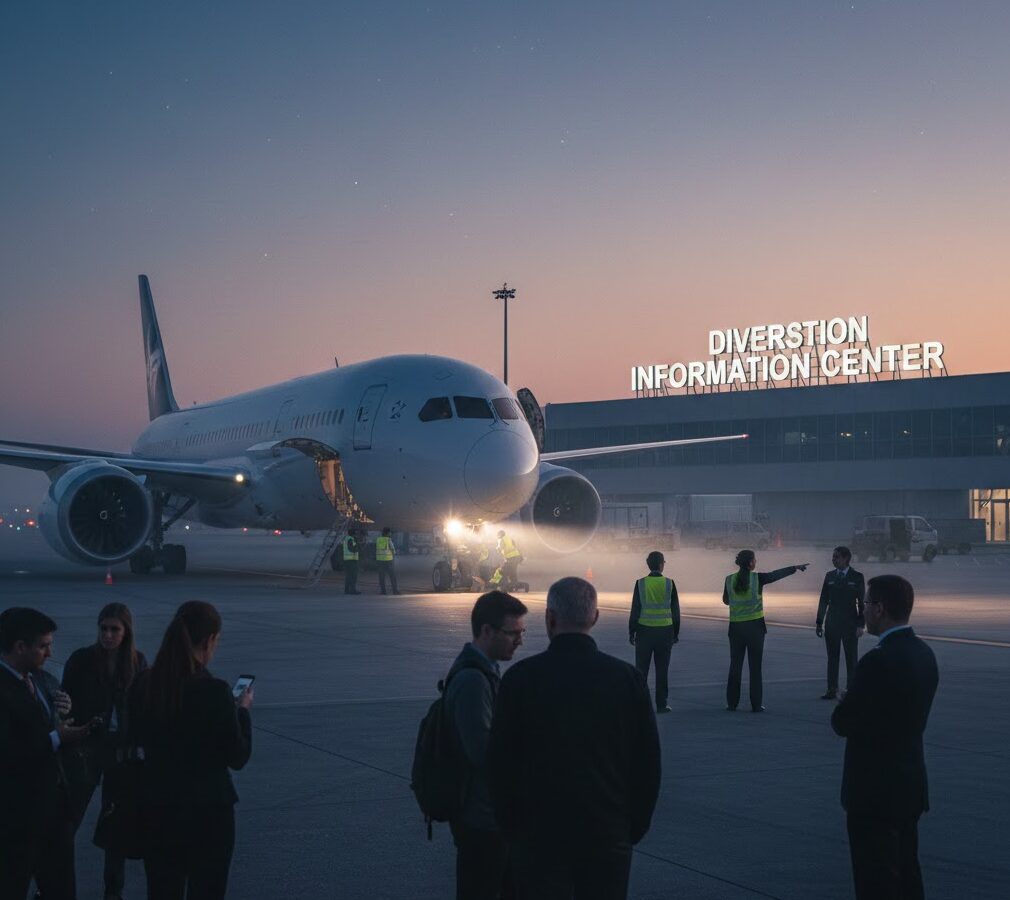
When you’re 30,000 feet in the air, the last thing you want to hear over the intercom is that your plane is changing course. However, flight diversions due to technical issues happen every day to ensure passenger safety.
While “technical issue” sounds vague and often scary, it is a broad term used by airlines to cover everything from a flickering sensor light to more serious mechanical concerns. Here is a comprehensive guide on why flights get diverted, your rights as a passenger, and how to handle the situation.
Common Reasons for Technical Diversions
Safety is the absolute priority in aviation. Pilots and ground control follow a strict “better safe than sorry” protocol. Common technical triggers include:
-
Instrument Malfunctions: Failure of backup systems or navigation sensors.
-
Engine Performance Issues: Unusual vibrations or oil pressure readings.
-
Hydraulic Problems: Issues with landing gear or wing flaps.
-
Cracked Windshields: Often caused by temperature fluctuations or bird strikes.
-
Fuel System Errors: Discrepancies in fuel consumption readings.
What Happens During a Diversion?
Once a technical issue is identified, the flight crew coordinates with Air Traffic Control (ATC) to find the nearest suitable airport. “Suitable” doesn’t just mean the closest runway; it must be an airport with the facilities to repair that specific aircraft type and accommodate the passengers.
Pro Tip: In most cases, a diversion is a precautionary measure, not an emergency landing. The crew is simply following a checklist to prevent a minor issue from becoming a major one.
Passenger Rights: Compensation and Care
If your flight is diverted due to a technical fault, you are generally entitled to assistance because a mechanical issue is considered within the airline’s control (unlike bad weather).
1. The Right to Care
If the delay lasts more than a few hours at the diversion airport, the airline should provide:
-
Food and drink vouchers.
-
Access to communication (emails/calls).
-
Hotel accommodation and transport (if an overnight stay is required).
2. Re-routing or Refunds
The airline is responsible for getting you to your final destination as soon as possible, either on the repaired aircraft, a different plane, or even a rival airline’s flight.
3. Financial Compensation
Depending on the jurisdiction (such as EU 261/2004 in Europe or UK261), you may be eligible for cash compensation if the diversion results in a delay of more than 3 hours at your final destination.
How to Stay Calm and Prepared
-
Listen to the Crew: They are trained to handle these specific scenarios.
-
Keep Your Receipts: If the airline doesn’t provide vouchers, keep receipts for food and transport to claim reimbursement later.
-
Check Your App: Airline apps often update faster than airport screens regarding new gate assignments or flight times.
Conclusion
A flight diverted due to a technical issue is an inconvenience, but it is proof that the aviation safety system is working. By prioritizing maintenance and caution over schedules, airlines ensure that air travel remains the safest way to move across the globe.
Explore More
United Airlines Flight UA770 Emergency Diversion: What Really Happened?
Delta Flight DL275 Diverted to LAX: What Travelers Need to Know









Leave a Reply