

Executive Summary
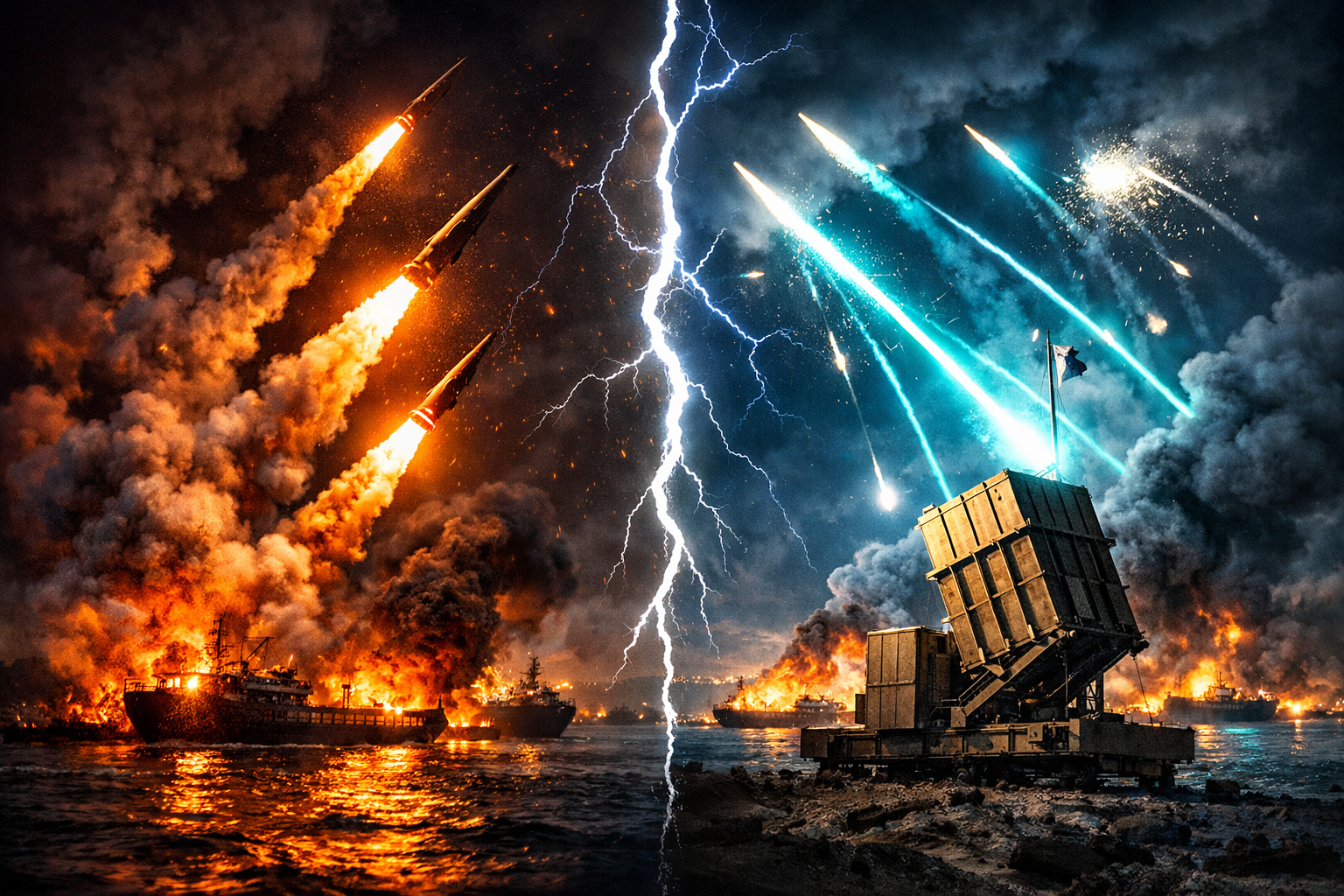
The military standoff between Tehran and Jerusalem that erupted in late February 2026 has fundamentally altered the security architecture of the Middle East. What analysts initially predicted would be limited surgical strikes has metastasized into a multi-front confrontation involving state and non-state actors across the Levant and Persian Gulf. This analysis examines the operational dynamics, geopolitical ramifications, and potential trajectories of the conflict as it enters its second month.
Part I: Origins and Escalation Dynamics
The February Catalyst
Military historians will likely mark February 28, 2026, as the inflection point when decades of shadow warfare between the Islamic Republic and the State of Israel transitioned into open hostilities. The decision by Washington and Jerusalem to launch coordinated aerial operations against Iranian nuclear infrastructure and military command centers represented a calculated gamble that Tehran would absorb the blows without massive retaliation.
That calculation proved erroneous.
Within hours of the initial bombardment, Iranian commanders activated contingency plans that had remained dormant through years of tit-for-tat incidents. The speed and scale of Tehran’s response surprised Western military planners who had anticipated more measured, graduated escalation.
Operational Evolution: From Precision to Area Denial
The character of warfare has transformed dramatically since those first exchanges:
Phase One (February 28 – March 15): Limited exchange of missile strikes and aerial bombardment focused primarily on military installations and nuclear facilities.
Phase Two (March 15 – March 30): Expansion to economic warfare with the effective closure of maritime chokepoints, particularly the strategic passage connecting the Persian Gulf to the Gulf of Oman.
Phase Three (April 1 – Present): Generalized missile barrages against population centers and critical infrastructure across multiple nations.
Part II: The Maritime Dimension
Anatomy of a Blockade
The closure of the primary energy artery serving global markets did not occur through traditional naval interdiction. Rather, Iranian military planners employed a sophisticated combination of threats, insurance market manipulation, and selective demonstrations of anti-shipping capabilities to achieve functional blockade without deploying surface vessels.
Maritime data reveals the effectiveness of this approach:
-
Pre-conflict baseline: Approximately 70 vessels transiting daily
-
Current traffic: Reduced to sporadic individual movements
-
Insurance premiums: Increased by orders of magnitude, effectively prohibiting commercial operations
-
Alternative routing: Limited capacity through Saudi overland pipelines and Iraqi trucking corridors
The economic weaponization of geography has created a supply shock that energy markets are struggling to absorb. Brent crude futures have experienced volatility not witnessed since the supply disruptions of the early 2020s, while retail fuel costs in import-dependent economies have reached politically sensitive thresholds.
Coalition Responses and Strategic Divergence
The international response to the maritime crisis has exposed significant disagreements among traditional allies regarding appropriate countermeasures:
Atlanticist Position: Led by London and Washington, emphasizing freedom of navigation operations and potential military escort of commercial traffic.
Continental Caution: Paris and Berlin advocating diplomatic solutions, with French officials publicly characterizing military intervention as operationally unrealistic given Iranian coastal defense capabilities.
Regional Pragmatism: Gulf monarchies pursuing bilateral arrangements with Tehran to secure limited passage rights for their own energy exports while avoiding entanglement in wider military operations.
Part III: The Humanitarian Calculus
Civilian Impact Assessment
The human toll of the confrontation extends far beyond immediate casualties, though those numbers alone are staggering. Current estimates suggest:
Fatalities by Category:
-
Combatant deaths (regular military): 1,400+
-
Civilian deaths from direct military action: 900+
-
Displaced persons requiring humanitarian assistance: 1.8 million
-
Medical infrastructure compromised: 14 major facilities
The destruction of the Tehran-based infectious disease research center represents a particularly troubling development, eliminating decades of accumulated scientific capacity at a moment when regional public health systems are already under extreme stress.
Displacement Patterns
The conflict has generated complex population movements:
-
Internal displacement within Lebanon: Approximately 1 million persons, primarily from southern regions subject to ground incursion and aerial bombardment.
-
Cross-border flows: Limited due to restrictive immigration policies in neighboring states, creating bottlenecks at key crossing points.
-
Urban concentration: Displaced populations accumulating in Beirut and other coastal cities, straining municipal services and housing stock.
Humanitarian organizations report severe constraints on relief operations due to security conditions and the degradation of transportation infrastructure.
Part IV: Military Capabilities and Limitations
Iranian Strategic Posture
Tehran’s military command has demonstrated several capabilities that confounded Western intelligence assessments:
Resilience of Command and Control: Despite extensive targeting of leadership nodes, Iranian coordination of complex multi-domain operations has remained effective.
Missile Arsenal Depth: Repeated barrages against Israeli and Gulf targets suggest larger inventories than previously estimated, or successful dispersal and concealment of launch systems.
Proxy Network Activation: Hezbollah operations in Lebanon, Houthi strikes from Yemen, and militia mobilization in Iraq have created genuine multi-front pressure on Israeli and American forces.
However, Iranian forces have also revealed significant vulnerabilities:
-
Air defense networks have proven porous against American stealth platforms.
-
Nuclear infrastructure has suffered damage that will require years to remediate.
-
Economic pressure has constrained resupply of precision-guided munitions.
Israeli and American Operational Constraints
The technological superiority of Israeli and American forces has not translated into decisive strategic advantage. Several factors have limited operational effectiveness:
Political Restraint: Concerns about regional escalation have constrained target selection and strike intensity. Casualty Aversion: The loss of 13 American service members and 19 Israeli fatalities has generated domestic pressure for mission definition and exit timelines. Strategic Ambiguity: Unclear ultimate objectives—regime change, capability degradation, or behavioral modification—have complicated military planning.
Part V: Economic Warfare and Global Spillover
Energy Market Disruption
The closure of Persian Gulf maritime traffic has initiated a structural reassessment of global energy security:
Immediate Price Effects:
-
Crude oil benchmarks: 18-22% increase since February 28
-
Refined product premiums: Particularly acute for diesel and jet fuel
-
Natural gas futures: European and Asian markets experiencing volatility
Supply Chain Adaptations:
-
Strategic petroleum reserve releases by major consuming nations
-
Accelerated negotiations for alternative supply contracts
-
Investment in transportation infrastructure bypassing the affected region
Broader Economic Implications
Beyond energy markets, the conflict has generated:
-
Insurance market crisis: Marine war risk premiums have become prohibitive for regional commerce.
-
Aviation disruption: Major carriers suspending routes through affected airspace.
-
Capital flight: Significant portfolio reallocation away from regional emerging markets.
Part VI: Diplomatic Landscape and Exit Options
Current Negotiation Channels
Multiple parallel diplomatic efforts are underway, though none have yet achieved breakthrough:
Omani Mediation: Muscat’s traditional role as interlocutor between Iran and Western powers has been reactivated, with Iranian officials reportedly drafting frameworks for maritime traffic monitoring.
United Nations Process: The Security Council has scheduled deliberations for April 4, though veto dynamics among permanent members limit prospects for binding resolutions.
Track II Diplomacy: Academic and former official networks exploring confidence-building measures and technical agreements on nuclear and maritime issues.
Obstacles to Resolution
Several factors complicate diplomatic progress:
Asymmetric War Aims: Iranian leadership has framed the conflict in existential terms, demanding recognition of regional sphere of influence, while American objectives remain focused on capability limitation.
Domestic Political Constraints: Leaders on all sides face internal pressure against appearing to capitulate, particularly given casualties already sustained.
Trust Deficit: Decades of hostile relations have eliminated the baseline confidence necessary for negotiated settlements.
Part VII: Scenario Analysis
Scenario One: Negotiated Stabilization (Probability: 35%)
Under this trajectory, intensified diplomatic pressure combined with military stalemate produces a ceasefire agreement within 4-6 weeks. Key elements would likely include:
-
International monitoring of maritime traffic through the affected strait
-
Commitments regarding nuclear program limitations
-
Prisoner exchanges and humanitarian corridors
-
Gradual sanctions relief
Scenario Two: Prolonged Attrition (Probability: 45%)
The conflict continues for 3-6 months without decisive resolution, characterized by:
-
Periodic missile exchanges and limited ground operations
-
Sustained economic pressure through maritime closure
-
Gradual erosion of international attention and diplomatic engagement
-
Eventual exhaustion-based negotiation
Scenario Three: Regional Escalation (Probability: 20%)
Expansion of hostilities to include direct involvement of additional major powers:
-
Turkish military intervention in northern Iraq or Syria
-
Saudi Arabian entry into active combat operations
-
Russian or Chinese direct military support to Iranian forces
-
Potential nuclear threshold considerations
Part VIII: Strategic Implications and Lessons
For Regional Security Architecture
The conflict has demonstrated the obsolescence of previous security frameworks:
-
The American security guarantee to Gulf monarchies has proven insufficient to prevent economic warfare.
-
Israeli military superiority does not translate into strategic invulnerability.
-
Iranian asymmetric capabilities have offset conventional military inferiority.
For Global Governance
The crisis has revealed institutional incapacity:
-
United Nations mechanisms for conflict prevention have failed.
-
International energy governance structures lack contingency protocols.
-
Humanitarian law enforcement in active conflict zones remains inadequate.
Conclusion: An Uncertain Trajectory
As the Iran-Israel confrontation enters its second month, the only certainty is continued uncertainty. Neither side has achieved decisive military advantage; neither has demonstrated willingness to accept terms the other could plausibly accept. The economic and humanitarian costs mount daily, yet the logic of escalation continues to dominate decision-making.
For policymakers in Washington, Jerusalem, Tehran, and capitals worldwide, the imperative is clear: prevent Scenario Three while creating conditions for the diplomatic resolution envisioned in Scenario One. The alternative—months of continued attrition with constant risk of uncontrolled expansion—serves no party’s interests, yet remains the most probable outcome given current trajectories.
The coming fortnight will prove critical. Military operations are approaching tempo thresholds that will either produce breakthrough or lock in prolonged confrontation. The international community’s capacity for collective action—or its absence—will shape regional security for the decade ahead.
Reference Materials and Data Sources
This analysis synthesizes information from multiple open-source intelligence outlets, maritime tracking services, energy market data providers, and official government communications. All casualty figures represent best estimates subject to revision as additional information becomes available.
Key Indicators to Monitor:
-
Daily vessel transits through the Strait of Hormuz
-
Brent crude price movements
-
Official statements from Tehran, Jerusalem, and Washington
-
UN Security Council voting patterns
-
Military casualty reports from all parties
About This Analysis
This strategic assessment represents independent analysis based on publicly available information. The author has no affiliation with any government, military, or commercial entity involved in the conflict. All projections represent informed judgment rather than definitive prediction.
Read more latest news and analysis at Space Coast Daily












Leave a Reply